 Back to Insights
Turkey, Hormuz and the race for Eurasian connectivity
Ankara is seeking to turn a phase of geopolitical disruption into a strategic opportunity. Can the Middle Corridor provide a viable alternative to bypass Hormuz?
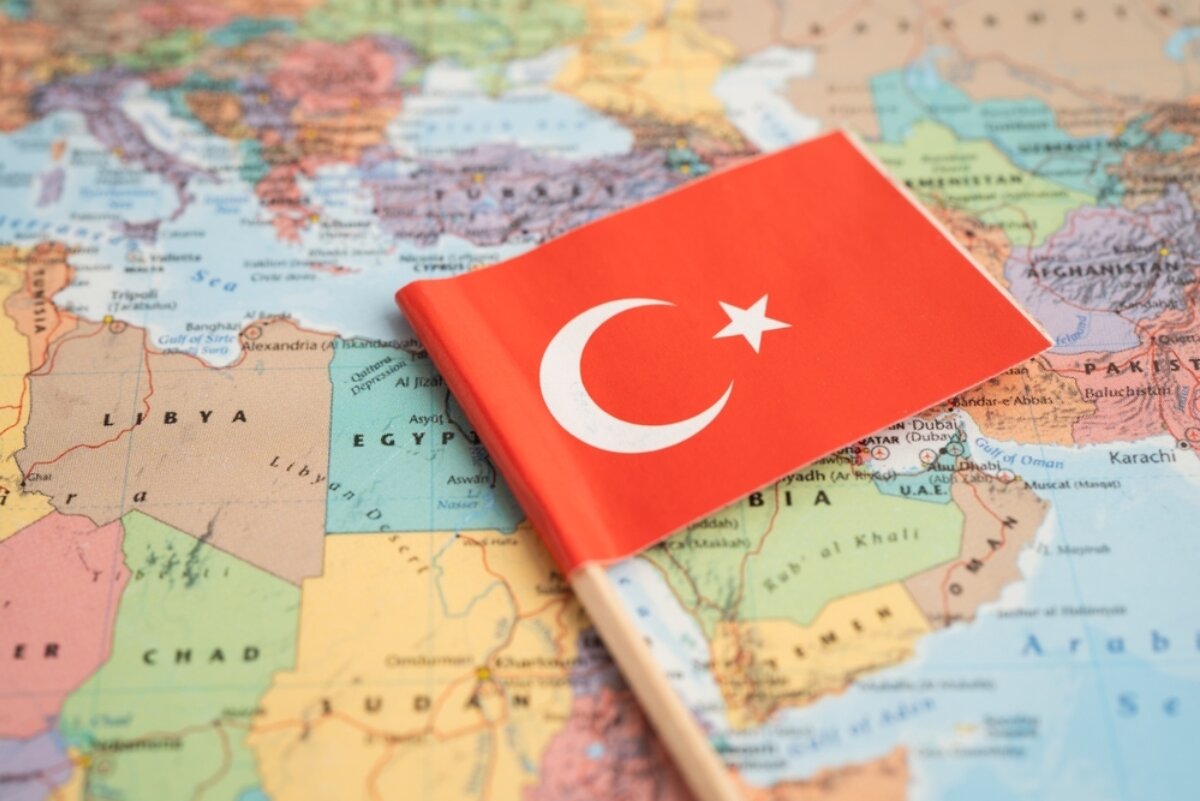
“Turkey stands out as an island of stability and a safe haven,” President Recep Tayyip Erdoğan said last week, explicitly linking the country’s positioning to the ongoing instability across key global transit routes. “We wholeheartedly believe that this global crisis will open new doors for our country,” he added, referring to ongoing discussions on alternative energy transmission routes.
The message has been echoed at the operational level. “Developing alternative routes has become a necessity,” Transport Minister Abdulkadir Uraloğlu had already noted earlier this year, just days before the launch of US (and Israeli) strikes against Iran. Those actions were followed by Iranian retaliatory measures targeting Gulf countries, contributing to a broader escalation across the Middle East. Although the region is currently in a fragile state of de-escalation, pressures on maritime chokepoints — starting with the Strait of Hormuz — have not eased.
Taken together, these statements go beyond short-term positioning. They point to a broader strategic effort by Ankara to leverage the opportunity created by rising instability — particularly the uncertainty surrounding Hormuz — in order to accelerate the development of alternative overland corridors between Asia and Europe. In this emerging landscape, Turkey is seeking to play a predominant geopolitical — and therefore geoeconomic — role.
From disruption to diversification
The renewed emphasis on alternative routes reflects a structural transformation of Eurasian connectivity, triggered by Russia’s full-scale invasion of Ukraine and further accelerated by the growing vulnerabilities of maritime chokepoints, starting with the Strait of Hormuz. In this sense, the crisis in the Gulf does not create a new need, but reinforces and accelerates an existing dynamic: the imperative to diversify trade routes between Europe and Asia while reducing exposure to concentrated geopolitical risks.
Until 2022, the so-called Northern Corridor — the main overland route linking Europe and China via Russia — accounted for more than 80 per cent of total rail freight between the two continents. The war, combined with sanctions and heightened political risk, has significantly reduced its viability, forcing both European and Asian actors to reassess their logistical dependencies.
In this context, the Middle Corridor has emerged as a relevant — if still imperfect — alternative. Supported by both European governments and China as part of broader diversification strategies, the corridor has gained increasing political attention in recent years, including in multilateral discussions on Eurasian connectivity. Its appeal is also linked to the relative stability of the regions it traverses: despite surrounding tensions, parts of the Caucasus and Central Asia have maintained a degree of continuity, increasing their attractiveness as platforms for logistics and connectivity projects.
Operational since 2017, the route connects Europe (via Turkey) to China through a multimodal network spanning the Caucasus and Central Asia — including Georgia, Azerbaijan, the Caspian Sea and onward links through Kazakhstan or, alternatively, Uzbekistan and Turkmenistan. Rather than a single infrastructure, it functions as a fragmented system of rail, road and maritime segments.
Traffic growth has been significant. Volumes increased by 250 per cent in 2022 and by a further 88 per cent in 2023. Yet this expansion has not translated into full operational efficiency. While the corridor is geographically shorter than the Northern Corridor and can, in theory, reduce transit times to around two weeks, in practice bottlenecks — infrastructural, regulatory and geographical in nature — often extend delivery times to several weeks. These include delays at border crossings due to heterogeneous and at times protectionist customs procedures, discontinuities in technical standards such as rail gauges, and the physical complexity of routes crossing areas with difficult terrain and variable climatic conditions. Combined, these factors undermine the corridor’s overall competitiveness.
The main gaps remain in rail capacity and port infrastructure along the Caspian. Projects such as the expansion of the Baku–Tbilisi–Kars railway and upgrades to ports in Kazakhstan and Georgia aim to address these shortcomings, alongside new rail links in Central Asia. These initiatives, however, require substantial investment and long-term coordination.
Governance challenges are equally significant. Regulatory fragmentation — across customs regimes, technical standards and levels of digitalisation — continues to hinder integration. As a result, the corridor’s development depends not only on infrastructure upgrades, but also on the emergence of a more coherent regulatory framework, a process that remains incomplete.
Beyond physical constraints, market perceptions are also shifting. As uncertainty persists, a structural risk premium is increasingly embedded in energy and commodity prices, reflecting the growing view that maritime chokepoints such as Hormuz can no longer be treated as fully reliable transit routes. Even a formal de-escalation would be unlikely to fully restore previous levels of confidence, reinforcing the long-term shift towards diversification.
According to the World Bank, addressing these constraints could triple traffic volumes by 2030. The European Bank for Reconstruction and Development has similarly identified the corridor as the most efficient and sustainable land route linking Europe with Central Asia, particularly in connection with the TEN-T (Trans-European Transport Network, the EU’s trans-European transport system). This potential, however, comes at a cost: investment needs are estimated at around €18bn — higher than initial estimates for launching the IMEC axis (around €9bn to move the first container), which is likewise conceived as a geoeconomic diversification route capable of bypassing sensitive chokepoints such as Hormuz and the Red Sea.
Turkey’s strategic bet: from transit country to system shaper
Ankara is not merely adapting to this evolving landscape — it is seeking to shape it, starting with the narrative around the need for differentiated geoeconomic corridors grounded in strategic redundancy.
Preparations at the Alican border crossing with Armenia, closed for more than three decades, offer a concrete example of Turkey’s ambitions. What appears to be a local confidence-building measure is in fact part of a broader effort to reconfigure regional connectivity. Its eventual reopening would enable a direct link between Turkey and Azerbaijan through Armenian territory, expanding the capacity of the Middle Corridor and reducing reliance on existing routes via Georgia.
Within this framework, projects such as the so-called “Trump Route for International Peace and Prosperity” (TRIPP) — a US-backed rail and road link connecting Turkey to Azerbaijan via Armenia — carry significance beyond infrastructure. They form part of a broader attempt to reshape the geography of Eurasian trade by bypassing politically sensitive routes, without eliminating the corridor’s underlying geopolitical vulnerabilities.
At the same time, Turkey is advancing complementary initiatives such as the Development Road, a planned road and rail network linking the Gulf to Europe through Iraq and then into Turkish territory, where it would connect with national infrastructure (rail and ports) before reaching European markets. Although still at an early stage and facing significant security and financing challenges, the project reflects Ankara’s ambition to position itself as the central hub of a new Eurasian logistics architecture.
Geography remains Turkey’s fundamental asset. The country already plays a key role as an energy hub, hosting strategic infrastructure such as the Baku–Tbilisi–Ceyhan pipeline and acting as a transit corridor for substantial oil flows through the Bosphorus. The potential revival of projects such as the Trans-Caspian pipeline would further reinforce its role as a bridge between Central Asian resources and European markets.
This growing relevance is mirrored by the engagement of major geopolitical actors. The European Union has identified the corridor as part of its broader connectivity strategy, while China continues to view it as a complementary axis within its Belt and Road framework. The United States has also shown increasing interest, particularly in relation to access to critical raw materials in Central Asia.
This positioning was also on display at the Antalya Diplomacy Forum, where Turkey brought together representatives from around 150 countries, including a wide range of middle and regional powers. Beyond its diplomatic significance, the forum highlighted a growing convergence around the need to develop alternative connectivity routes amid systemic uncertainty. Several participating countries pointed to the Middle Corridor as an increasingly relevant Eurasian transit axis, not only as a logistical solution but as part of a broader effort by middle powers to coordinate responses to geopolitical fragmentation. In this sense, Turkey is not only promoting infrastructure projects, but also actively shaping the diplomatic and strategic environment in which these corridors are embedded.
Limits, risks and strategic implications
Despite its growing relevance, the Middle Corridor remains, for now, a system in transition rather than a fully operational alternative to established routes.
Logistical constraints — including slow crossings across the Caspian, fragmented rail networks and complex administrative procedures at borders — are likely to continue limiting scalability. At the same time, proximity to unstable regions and reliance on delicate political balances introduce additional layers of risk.
Geopolitical competition further complicates the picture. Russia retains a structural interest in preserving the relevance of northern routes, while Iran remains a key — albeit highly controversial and unpredictable — transit actor in alternative configurations. More broadly, the diversification of Eurasian corridors aligns with the interests of most major actors — with the notable exception of Russia, whose position is directly challenged by the reconfiguration of transit flows. The success of Turkey’s strategy therefore depends not only on infrastructure development, but also on its ability to navigate a complex and shifting geopolitical environment.
For Europe, the implications are twofold. On the one hand, the expansion of overland corridors offers an opportunity to diversify supply chains and reduce exposure to maritime chokepoints. On the other, it risks creating new dependencies on transit countries whose strategic priorities may not fully align with those of the European Union.
In this context, Ankara — a NATO ally — is positioning itself as a point of connection and relative trust between the Western world and the broader Middle Eastern and Eurasian space. The development of the Middle Corridor — and Turkey’s role within it — should therefore be understood within the broader reconfiguration of global connectivity. As maritime vulnerabilities increase, overland routes are gaining strategic value. The key question is not whether land routes will replace maritime ones, but how they will reshape the balance between them. In this scenario, Ankara’s objective is clear: to ensure that the emerging geography of connectivity runs through its territory — and increasingly on its own terms.