 Back to Insights
Europe Discovers the Undersea Domain. Italy to Lead the Mediterranean Regional Cable Hub
The European Commission's decision to entrust Italy with the coordination of the new Mediterranean Regional Cable Hub represents far more than the allocation of another EU-funded project. It marks one of the first concrete steps towards a European policy for the undersea domain, in which the protection of critical infrastructure becomes a permanent function of the Union's security architecture.
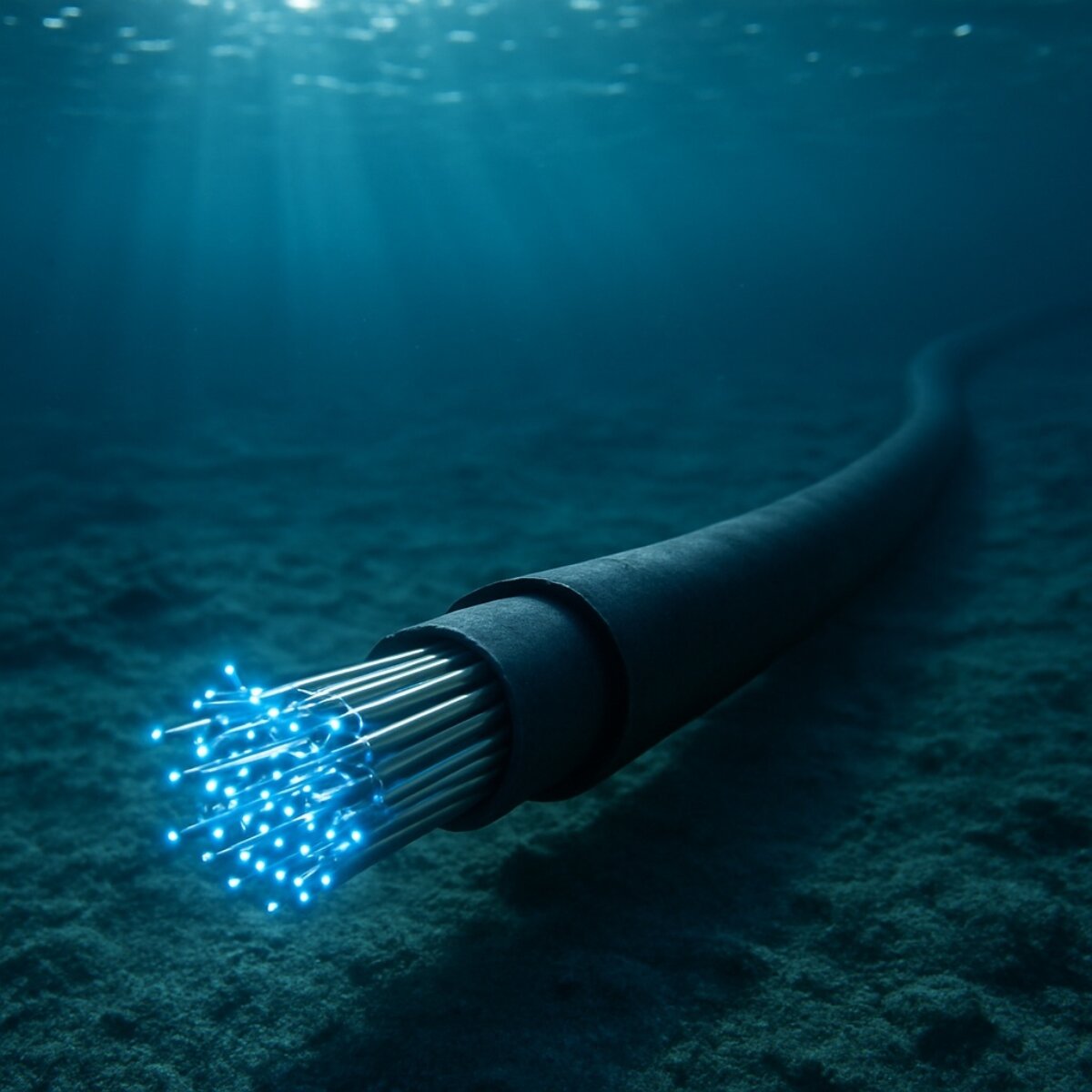
With the establishment of the first two Regional Cable Hubs—one in the Baltic Sea, coordinated by Finland, and one in the Mediterranean, coordinated by Italy together with Greece, Cyprus and Malta—Brussels is launching a new framework for the surveillance and coordination of undersea infrastructure. Supported by an initial €5.8 million allocation and complemented by a new €40 million call to strengthen European submarine cable repair capabilities, the initiative constitutes the first operational implementation of the EU Action Plan on Cable Security presented in 2025. While the financial commitment remains relatively modest, the strategic direction is unmistakable: to build shared operational capabilities for monitoring, protecting and restoring the infrastructure upon which Europe's digital connectivity, energy security and economic activity increasingly depend.
This shift is significant because it fundamentally changes the way the European Union approaches submarine cables. For decades these networks were regarded primarily as commercial infrastructure, managed by telecommunications operators and largely absent from security policy. The acceleration of digitalisation, the expansion of cross-border energy interconnections and a series of incidents affecting undersea infrastructure in the Baltic Sea have progressively altered this perception. Today, Brussels places submarine cables firmly within the broader framework of economic security, critical infrastructure resilience and European technological sovereignty.
This evolution reflects broader dynamics in international strategic competition. The seabed now hosts an increasingly dense concentration of essential infrastructure, including digital backbones, electricity interconnectors, pipelines, offshore energy installations and sensor systems. Their vulnerability directly affects governments, businesses and citizens alike, as disruptions may compromise essential services, financial transactions, energy supplies and strategic communications. The security of undersea infrastructure is therefore becoming inseparable from states' ability to guarantee the operational continuity of their societies.
Recent incidents in the Baltic Sea have demonstrated how these networks can become targets of coercive activities conducted within the so-called grey zone, where sabotage, interference and deliberate damage generate strategic effects while remaining below the threshold of open armed conflict. The difficulty of rapidly attributing responsibility and coordinating an effective response makes undersea infrastructure one of the clearest manifestations of the hybrid nature of contemporary strategic competition. In Europe, attention has focused primarily on activities attributed to Russia's sphere of influence, while in the Indo-Pacific the protection of submarine cables has become an integral component of resilience strategies adopted by partners such as Taiwan and Japan in response to China's growing assertiveness. Although the geopolitical contexts differ, the underlying trend is the same: critical infrastructure has become one of the instruments through which great-power competition is increasingly exercised.
The European Union's response lies in the development of common capabilities. Over the past decade Brussels has steadily expanded its investments in digital connectivity and infrastructure development. The Regional Cable Hubs open a second chapter, dedicated to the structured protection of those same networks. This new approach does not replace the previous one but complements it. Infrastructure development remains a European priority, while permanent mechanisms for surveillance, operational coordination and restoration are added to strengthen the resilience of existing networks.
The Regional Cable Hubs are not new European agencies but permanent platforms through which Member States will be able to exchange information in near real time, develop a common understanding of threats, detect anomalies and coordinate responses to incidents affecting cross-border infrastructure. The repair modules financed through the new call complete this architecture by reducing the time required to restore damaged connections. In this context, resilience and deterrence become mutually reinforcing. The ability to detect anomalies rapidly, attribute responsibility and restore services increases the costs of hostile activities while strengthening the credibility of the European response.
Henna Virkkunen, Executive Vice-President of the European Commission for Tech Sovereignty, Security and Democracy, captured this approach by stating that Europe is strengthening its capacity to "detect threats, act faster and respond together", thereby investing "in its own security, resilience and sovereignty". Her remarks reflect an institutional evolution that extends well beyond submarine cables. The European Union is progressively complementing its regulatory and financial instruments with shared operational capabilities in strategic domains.
Italy's role should be understood within this broader transformation. The coordination of the Mediterranean Hub undoubtedly reflects the country's geographical position as one of the principal landing points for networks linking Europe with the Eastern Mediterranean, North Africa, the Middle East and Asia. Geography, however, provides only part of the explanation. Over recent years Italy has developed an ecosystem that brings together digital infrastructure, submarine cable industries, undersea technologies, naval capabilities and institutional expertise dedicated to the maritime domain. The National Underwater Dimension Hub, established in December 2023, represents one of the clearest expressions of this trajectory, alongside an industrial base active in telecommunications, offshore energy and subsea technologies.
This focus also predates the current European initiative. As early as 2022, the Italian Navy launched a cooperation framework with national telecommunications operators aimed at strengthening the monitoring and protection of submarine infrastructure, anticipating an approach that integrates maritime security with network resilience and which is now finding expression at the European level. From this perspective, Italy is emerging as a pivotal state in the European strategy for the Mediterranean, capable of combining geographic position, industrial capabilities and operational expertise.
The Italian government interprets the coordination of the Regional Cable Hub as recognition of this strategic role. Minister for Enterprises and Made in Italy Adolfo Urso described the Commission's decision as "a development that confirms our country's strategic role", defining submarine cables as "the nervous system of communications and data exchange" and stressing that Italy stands "at the centre of a physical network linking Europe and the West with Africa and Asia". Beyond the political narrative, however, the Commission's decision reflects a structural reality: the Mediterranean is once again becoming the strategic hinge connecting Europe, Africa and the Middle East, where energy security, digital connectivity and geopolitical competition increasingly converge.
The protection of submarine cables, moreover, represents only one dimension of a broader transformation. The development of fibre sensing technologies makes it possible to use optical fibres not only for transmitting data but also as distributed sensors capable of detecting vibrations, environmental anomalies and potential interference along their routes. The network is therefore evolving beyond its traditional connectivity function, contributing instead to a more comprehensive understanding of the undersea domain while strengthening monitoring and early-warning capabilities.
It is precisely this convergence that is turning the undersea domain into one of the new frontiers of European security. The expansion of electricity interconnections with North Africa, the development of offshore infrastructure and Europe's growing dependence on digital networks will make the seabed increasingly central to the Union's security strategy. Submarine cables constitute today's primary test case, but they are unlikely to remain the only one. Energy interconnectors, sensing systems, offshore platforms and other forms of undersea infrastructure are likely to be progressively incorporated into the same strategic framework.
The establishment of the first Regional Cable Hubs should therefore be seen less as the conclusion of a policy process than as the beginning of a broader strategic transformation. Today's focus is on submarine cables; tomorrow, the same approach may extend to the wider ecosystem of undersea infrastructure, from electricity interconnectors and offshore platforms to maritime observation and sensing systems. From this perspective, the Mediterranean is no longer simply a corridor for connectivity. It is becoming one of the principal theatres in which Europe is shaping a new conception of security based on the integration of infrastructure development, operational resilience and comprehensive awareness of the undersea domain.