
 Back to Insights
The UAE’s Exit from OPEC: Strategic Autonomy, Regional Fragmentation, and the Transformation of Energy Governance
The United Arab Emirates’ decision to leave OPEC marks a structural turning point for global energy governance, reflecting deeper geopolitical realignments, intensifying intra-Gulf competition, and a broader shift toward strategic autonomy in an increasingly fragmented international system.
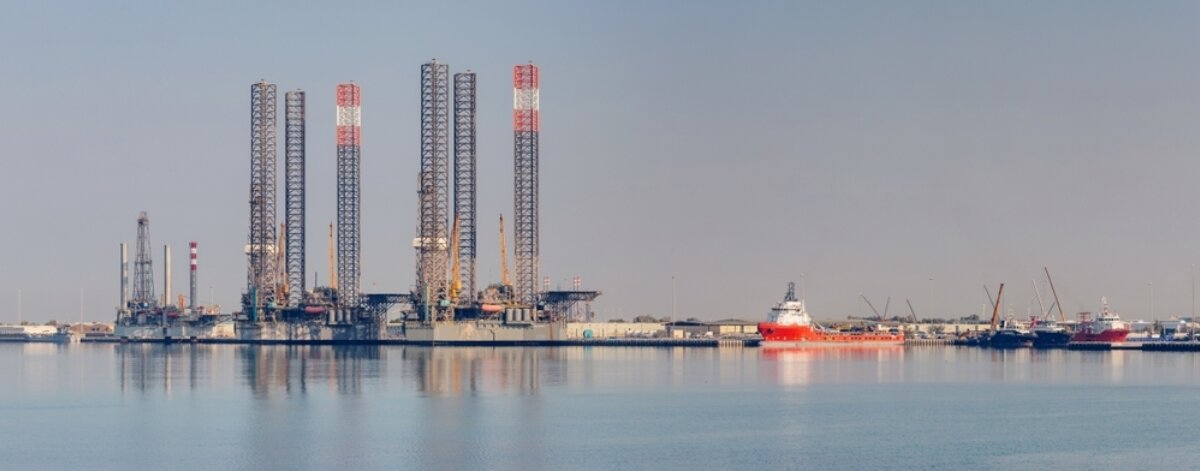
The United Arab Emirates’ decision to exit the Organization of the Petroleum Exporting Countries (OPEC), after nearly six decades of membership, is one of the most consequential developments for the global energy order in recent years.
Announced amid a regional crisis shaped by the conflict involving the United States, Israel and Iran, and the partial closure of the Strait of Hormuz, the move has limited immediate impact: the war has already put strong pressure on prices and markets, making it difficult to isolate its short-term effects, while geopolitical risk reduces the relevance of intra-OPEC dynamics and constrains any increase in output until shipping routes are fully restored. Yet, viewed over the medium to long term, the decision signals a deeper transformation in producer dynamics and, more broadly, in the logic of international cooperation.
At its core, the move reflects a longstanding frustration with the quota system. In recent years, Abu Dhabi has invested heavily to expand its production capacity, aiming to reach 5 million barrels per day. OPEC-imposed limits, however, have kept output at roughly 3.2–3.6 million barrels per day, constraining the ability to fully monetize these investments. In a context where demand growth appears less dynamic and the energy transition introduces new uncertainties, postponing production within a quota system has increasingly been seen as leaving value unrealized.
Exiting OPEC enables the UAE to pursue a volume-oriented strategy, increasing production to maximize revenues and market share. This approach diverges from that of Saudi Arabia, traditionally focused on price stabilization through supply restraint. The divergence also reflects different fiscal needs: Riyadh requires higher prices to sustain public spending and finance its Vision 2030 projects, while Abu Dhabi, with a stronger financial position, can afford greater flexibility.
This divergence has progressively fueled tensions between the Gulf’s two leading actors. The UAE’s exit crystallizes this divide, turning a managed disagreement within the cartel into a more explicit strategic misalignment. The relationship thus evolves from a functional partnership to a competitive coexistence that extends well beyond energy policy.
The implications for OPEC are significant. The UAE was one of the group’s largest producers, accounting for around 12% of total output, and one of the few members with meaningful spare capacity. Its departure weakens the cartel’s ability to respond rapidly to supply shocks and contain volatility, while increasing Saudi Arabia’s relative weight as the only actor capable of acting as a swing producer.
This development fits into a broader trend highlighting the structural limits of energy cartels. In recent years, OPEC+ (the broader alliance that includes OPEC members alongside producers such as Russia) has seen its market share eroded by expanding output in non-member countries, including the United States, Brazil and Canada. At the same time, internal discipline has weakened: some members have found ways to systematically exceed quotas, while others have been unable to meet them due to instability, sanctions or structural constraints. In this context, the organization’s ability to adapt its rules to the evolving distribution of production capacity has been limited.
Saudi Arabia’s growing centrality within the cartel has strengthened its operational role, but also intensified tensions. Production decisions have become increasingly dependent on Riyadh, effectively turning OPEC into a hierarchical system. For actors such as the UAE, with expansion ambitions and growing strategic autonomy, this arrangement has become increasingly untenable.
The Saudi reaction—or rather its cautious lack of public reaction—must be read in this context. Riyadh has an interest in projecting continuity and control, avoiding a harsh response that could turn the Emirati exit into a signal of irreversible crisis for the cartel. Silence serves to contain the risk of contagion among other members and to reassure markets about Saudi Arabia’s ability to manage supply.
This is where the timing of the UAE’s decision becomes particularly significant. Announcing the exit in the midst of a regional crisis, with energy flows already disrupted, has allowed Abu Dhabi to minimize immediate market impact and limit the scope for Saudi retaliation. Under normal conditions, Riyadh might have used the threat of a price war to enforce discipline. Today, with constrained export capacity and a highly unstable environment, that option appears far less credible.
At the regional level, the decision reflects a broader deterioration in relations between the UAE and Saudi Arabia. Divergences over Yemen, Sudan and approaches to Iran have widened over time. These are compounded by growing economic competition, as Saudi Arabia seeks to attract investment and economic activity in direct competition with the Emirati model.
The exit from OPEC is also accompanied by the UAE’s decision to leave the Organization of Arab Petroleum Exporting Countries (OAPEC), signaling a broader disengagement from regional energy coordination frameworks. At the same time, the UAE is strengthening cooperation with new partners, particularly in the security domain. The conflict with Iran has accelerated forms of operational coordination, for example in missile defense—reportedly including the possible deployment of Israeli systems such as Iron Dome on Emirati territory, according to international media reports, without official confirmation—reflecting a shift from diplomatic normalization to more integrated and functional cooperation.
Against this backdrop, the need for a pragmatic approach to security has been made explicit by renewed waves of Iranian attacks targeting the UAE in early May. Tehran is signaling a more confrontational posture toward Abu Dhabi, accusing it of facilitating U.S. and Israeli military and intelligence activities and of undermining Iran’s leverage over energy markets and maritime chokepoints. In this context, the UAE has reported new missile and drone attacks against its territory and energy infrastructure, including interceptions of cruise missiles, strikes near the Fujairah oil zone, and attacks on vessels linked to its national oil company. While these incidents do not yet amount to a full collapse of the ceasefire, they underline a targeted escalation focused on the UAE and reinforce the strategic rationale for deeper, more flexible security partnerships. In essence, Abu Dhabi requires enhanced security measures.
This development should be understood as part of the same underlying choice driving the OPEC exit: a pursuit of strategic autonomy that extends from energy to the broader security domain. In this respect, the UAE operates with greater flexibility than other regional actors. Unlike Saudi Arabia, whose role as custodian of Islam’s holy sites entails stronger political and symbolic constraints, Abu Dhabi can adopt a more pragmatic and less ideologically constrained approach, including operational cooperation with Israel when aligned with its national interests.
This fits within a broader evolution of the regional security model, increasingly oriented toward flexible, networked configurations rather than formal alliances. The UAE appears to favor a pragmatic approach based on targeted and adaptable partnerships, consistent with a wider pursuit of decision-making autonomy.
The implications extend to the deeper economic level. The Gulf development model—built on attracting capital, talent and investment through an image of stability—has come under pressure from Iranian attacks. Vulnerabilities in key sectors, from energy infrastructure to logistics and digital hubs such as data centers, directly affect growth prospects in strategic areas including artificial intelligence and advanced technological infrastructure.
In this context, the Emirati strategy is geared toward using hydrocarbon revenues to finance a broader economic transformation. Increasing production in the short term serves to support investment in high-value sectors, from AI to advanced manufacturing and defense. This reflects an attempt to rapidly convert natural resource advantages into long-term structural capabilities, in the awareness that the centrality of hydrocarbons will gradually decline and that the energy transition—already underway—requires monetizing resources within a narrowing window of opportunity.
Taking a wider perspective, the UAE’s decision reflects a broader trend toward fragmentation in the international order. Multilateral institutions, conceived in a different historical context, struggle to adapt to an environment marked by accelerated competition, diverging interests and a growing emphasis on strategic autonomy. In this setting, exiting an organization such as OPEC carries implications that extend well beyond the energy sector.
What emerges is a more fluid but also more unstable system, in which states increasingly favor autonomous strategies or ad hoc coalitions over collective governance mechanisms. In such an environment, adaptability and risk management become central, but so too does the likelihood of volatility and misalignment.
For the United Arab Emirates, fully aware of both the opportunities and the risks of the current moment, the calculation appears clear: the benefits of autonomy outweigh the costs of collective discipline. Whether this choice will prove sustainable over time—and whether other actors will follow a similar path—remains an open question. If they do, Abu Dhabi’s exit may not be an isolated episode, but rather a significant marker of a broader transformation in global energy governance and the geopolitical balances underpinning it.