 Back to Insights
How the Indo-Pacific is watching the crisis in the Middle East
Energy security, strategic distraction and the Indo-Mediterranean arc: how China, India and Japan are responding to the confrontation between the United States, Israel and Iran
The military escalation surrounding Iran is being closely monitored across the Indo-Pacific, not only because of its immediate implications for global energy flows, but also for its effects on strategic alignments and on the broader balance of great-power competition that accompanies the operations of the United States and Israel, the reaction of the Islamic Republic, and the repercussions throughout the Gulf.
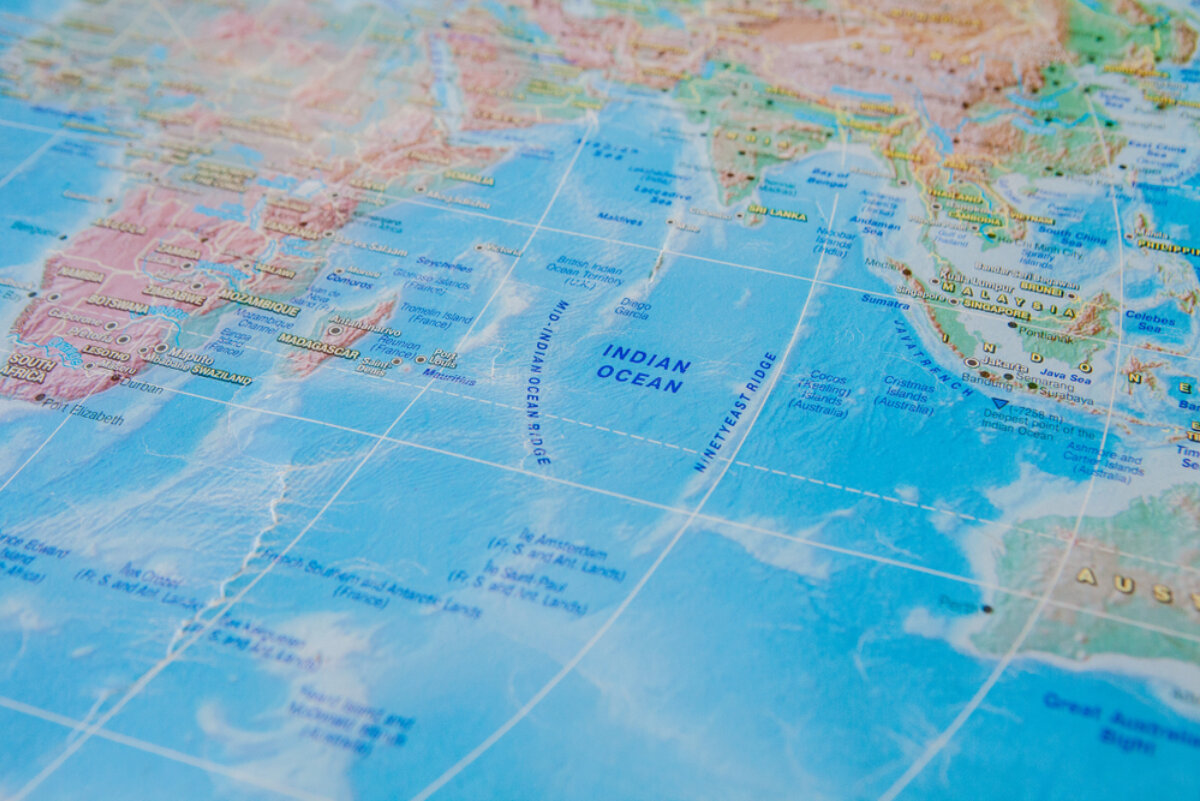
For many countries stretching from East Asia to South Asia, the ongoing conflict in the Middle East constitutes a geopolitically proximate event. It also represents a direct test of economic resilience and strategic positioning along what can increasingly be described as the Indo-Mediterranean arc.
A concrete indication of this geographic extension of the conflict has also emerged in the Indian Ocean. On Wednesday, March 4, the U.S. Secretary of Defense announced that an American submarine had sunk an Iranian frigate off the southern coast of Sri Lanka. Such an episode is rare in contemporary naval warfare and illustrates how the Middle Eastern crisis can rapidly project itself into the Indo-Pacific strategic space.
At the center of Asian concerns lies the Strait of Hormuz. Roughly one fifth of global oil consumption passes through this maritime chokepoint at the entrance of the Persian Gulf. Even more significant for the Indo-Pacific is the fact that the overwhelming majority of these energy flows move eastward.
China, India, Japan and South Korea together account for the largest share of oil imports originating in the Gulf. According to estimates from the International Energy Agency (IEA) and the U.S. Energy Information Administration (EIA), around 45 percent of China’s oil imports, more than 50 percent of India’s and over 60 percent of those of Japan and South Korea originate from this region. The stability of the Persian Gulf therefore becomes an essential component of their economic security.
In this sense, the current crisis concerns not only military alignments but perhaps even more importantly the geoeconomic dimension. Disruptions to maritime routes, sharp increases in energy prices and financial volatility represent immediate risks for Asian economies whose industrial models remain heavily dependent on imported hydrocarbons.
The responses of the principal Indo-Pacific actors therefore reveal a complex combination of caution, strategic calculation and economic vulnerability.
China: Strategic Distance and Material Interests
China has reacted to the escalation with a combination of rhetorical condemnation and strategic prudence. Official statements have emphasized the need for de-escalation, the protection of energy supply chains and, naturally, the safeguarding of navigation through the Strait of Hormuz.
This language reflects a pragmatic assessment of Chinese interests rather than an ideological alignment with Tehran. The relationship between China and Iran is in fact structurally asymmetric: Tehran depends far more on Chinese demand than Beijing depends on Iranian crude supply. Despite the twenty-five-year cooperation agreement signed in 2021, the Islamic Republic remains little more than a junior partner for the People’s Republic of China.
This dynamic helps explain China’s cautious posture. Unlike the United States or the former Soviet Union, Beijing has historically avoided deep military involvement abroad. Its network of formal defense commitments remains extremely limited, with North Korea representing the only alliance codified by treaty. China therefore tends to view geopolitical partnerships as flexible arrangements rather than permanent security guarantees.
This does not mean that the conflict has no influence on Chinese strategic calculations. A prolonged disruption of traffic through the Strait of Hormuz would exert immediate pressure on global energy markets, with direct repercussions for China’s domestic economy. Although Beijing possesses substantial strategic petroleum reserves, these stockpiles provide only temporary protection against prolonged supply shocks.
At the same time, Chinese strategists have long believed that a distracted Washington could indirectly benefit Beijing. Should the United States be forced to redirect military resources, political attention and financial capital toward managing instability in the Middle East, competitive pressure on China in the Indo-Pacific could temporarily ease.
A concrete example concerns the possible redeployment of Patriot air-defense batteries previously stationed in South Korea to the Middle East in order to strengthen the protection of U.S. assets in the region. This illustrates the direct effects of strategic interdependence.
Nevertheless, Beijing also appears cautious about allowing the escalation to spiral too far, particularly at a moment when diplomatic dialogue with Washington has shown signs of relative stabilization. In four weeks, U.S. President Donald Trump and Chinese leader Xi Jinping are expected to meet in Beijing, where discussions could potentially lead to a form of broad strategic understanding between the two powers—something approaching a return to the notion of an informal “G-2.” The Iranian dossier may complicate that encounter.
India: Diplomacy, Connectivity and Strategic Autonomy
India’s response has been particularly active. Prime Minister Narendra Modi launched a rapid diplomatic initiative across the region, speaking with numerous leaders in West Asia in the days immediately following the escalation.
New Delhi’s message has been consistent: moderation, de-escalation and the protection of critical corridors—both energy routes and broader commercial networks.
India’s concerns are not merely geoeconomic. The Middle East has acquired growing strategic importance for the country, which through dialogue with the Gulf monarchies and Israel seeks to implement, in practical economic, cultural, cooperative and military terms, what is sometimes described as the Indo-Abrahamic space—a network linking India, Israel and the Gulf states in expanding forms of economic, technological and security cooperation.
Millions of Indian citizens live and work in the countries now targeted by Iranian attacks, sending remittances that support household incomes in several Indian states. The region also represents an important destination for Indian exports and an increasingly significant source of sovereign investment in infrastructure and technology.
These interdependencies explain New Delhi’s strong interest in preventing escalation while preserving its long-standing policy of strategic autonomy.
Relations with Tehran also remain significant from a connectivity perspective. India is involved in the development of the Iranian port of Chabahar, a key node in a trade corridor linking the Indian Ocean to Afghanistan and Central Asia. This route allows New Delhi to bypass Pakistan and gain access to Eurasian markets.
The project forms part of the broader International North-South Transport Corridor (INSTC), a multimodal network of maritime, rail and road routes intended to connect Mumbai with Russia, the Caucasus and Europe via Iran, thereby strengthening Iran’s role as a regional logistical hub.
Despite geopolitical tensions, these infrastructures remain among the most tangible elements of India’s evolving global strategy. Among them is also the India-Middle East-Europe Economic Corridor (IMEC), launched at the Indian G20 summit in September 2023. The project now faces another stress test, following the one triggered by the Hamas attack of October 7, which inaugurated the current phase of conflict in the region.
Japan: Energy Vulnerability and Financial Stability
Japan’s response has been driven primarily by concerns over energy security. Approximately 70 percent of Japanese crude oil imports pass through the Strait of Hormuz, making any threat to this maritime passage a direct challenge to national economic stability.
Tokyo has therefore focused on crisis management. Prime Minister Sanae Takaichi has adopted a cautious but clear line: while avoiding explicit support for U.S. and Israeli strikes, she reiterated that Iran’s development of nuclear weapons “cannot be tolerated” and assured that the Japanese government is preparing for “any possible risk” arising from the regional escalation, while continuing to closely monitor the safety of navigation through the Strait of Hormuz.
Government agencies have established dedicated task forces to monitor energy markets, shipping companies have kept their vessels away from potential areas of hostility, and several corporations have begun evacuating personnel from affected zones. At the same time, Japanese authorities emphasize that the country maintains significant strategic reserves, including oil stocks sufficient to cover several months of consumption.
Financial markets have already reacted to the escalation, with fluctuations in the yen and declines in equity markets reflecting investor anxiety over energy price volatility and the increase in global risk. Japanese policymakers are therefore attempting to balance the immediate response to the crisis with the need to preserve financial stability.
Tokyo also carries the legacy of a previous diplomatic initiative during the Iranian crisis, undertaken partly to protect regional energy stability. In 2019, the late Prime Minister Shinzo Abe—political mentor to the current premier Sanae Takaichi—traveled to Tehran in an attempt to mediate between Washington and the Islamic Republic. He carried a message from U.S. President Donald Trump addressed to Supreme Leader Ali Khamenei, who was killed during the initial phase of the U.S. and Israeli attacks against Iran.
Abe’s mission—the first visit by a Japanese leader to Iran in more than forty years—ultimately produced no tangible results. Khamenei publicly rejected the American message and dismissed the possibility of dialogue with Washington. The episode remains emblematic both of the limits of mediation with Iran and of Tokyo’s enduring attention to the stability of the Persian Gulf, upon which its energy security crucially depends.
The Indo-Mediterranean Dimension
Ultimately, the current escalation highlights the growing interconnection between the Indo-Pacific and the Middle East. The crisis underscores the structural dependence of Asian growth models on stable maritime energy flows originating in the Gulf.
For many countries, the Middle East remains an indispensable supplier even as diversification toward renewable energy and alternative sources continues. Beyond energy, tensions also affect the trade routes linking Asia and Europe through the Red Sea and the Suez Canal—arteries that are fundamental to global supply chains.
For Indo-Pacific powers, the conflict therefore represents more than a regional security crisis. It is also a stress test for the resilience of the economic architecture that sustains both national and global growth.
The way the crisis evolves—whether toward prolonged confrontation or gradual de-escalation—will influence the strategic environment of the Indo-Pacific.
In an era marked by great-power competition and fragile supply chains, the Indo-Mediterranean arc is emerging as one of the most decisive geopolitical spaces of the twenty-first century. Within it intersect multiple interests: China’s political calculations in its rivalry with the United States, India’s geopolitical ambitions as a Eurasian connectivity power, and Japan’s commercial and energy priorities as a country heavily dependent on the stability of the routes linking the Gulf to Asian markets.