 Back to Insights
Delhi–Hanoi: the emergence of a new Asian alignment.
Defence, technology and supply chains: India and Vietnam are elevating their strategic partnership and strengthening their role in the evolving balance of power in the Indo-Pacific.
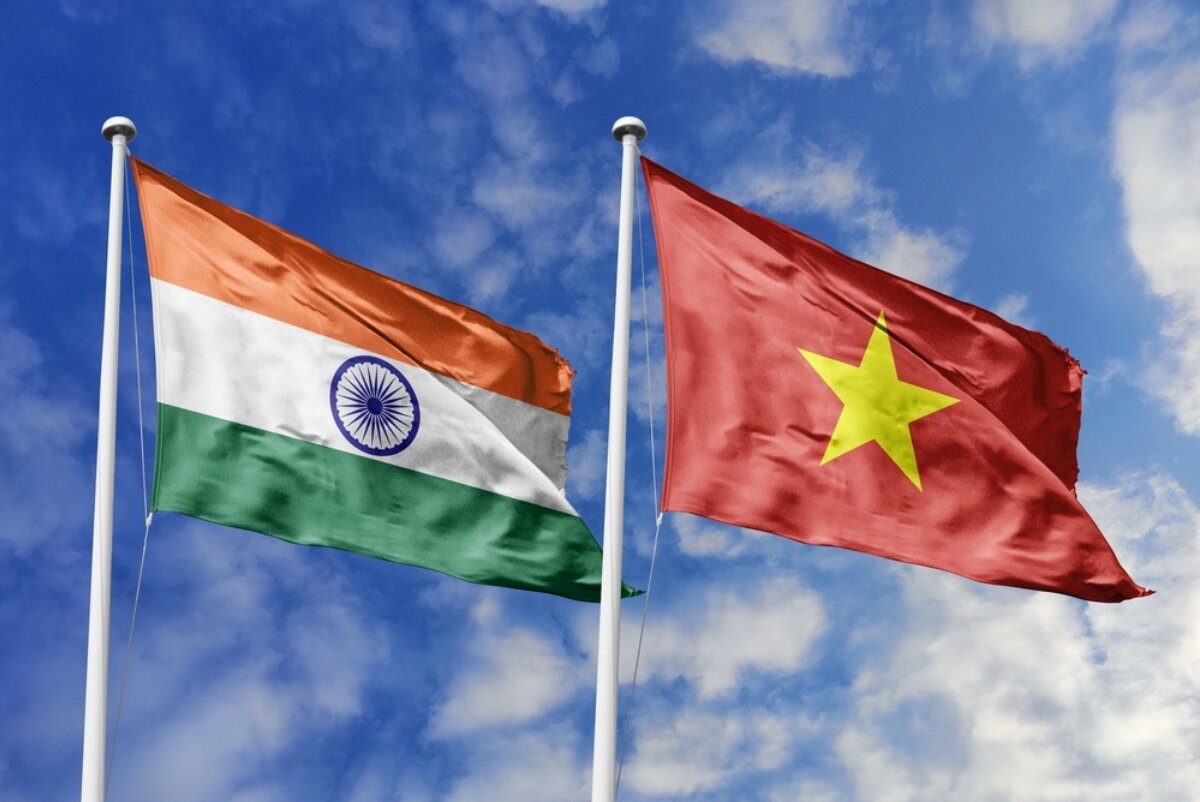
The official visit of the General Secretary of the Communist Party of Vietnam, Tô Lâm, to Delhi between 5 and 7 May 2026 marked one of the most significant geopolitical developments in the Indo-Pacific in recent months. The meeting with Indian Prime Minister Narendra Modi concluded with the elevation of bilateral relations to the level of an ‘Enhanced Comprehensive Strategic Partnership’, marking a qualitative leap in cooperation between two actors who share a growing strategic convergence amid Asia’s shifting strategic balance. The visit also took place just a few days before Donald Trump’s visit to China, a factor that fuelled fears among several regional partners of a more transactional US posture in Asia and a possible scaling back of the strategic guarantees offered by Washington to its allies.
The agreement between India and Vietnam should be viewed within the context of a progressive regionalization of strategic competition with China. In recent years, China’s growing assertiveness has produced a convergence among Asian middle powers united by a shared perception of vulnerability in the face of Beijing’s geopolitical ambitions. For India, the confrontation is centred primarily along the Himalayan border, the scene of recurring military tensions following the 2020 clashes in Ladakh; for Vietnam, however, the main point of friction remains the South China Sea, where Hanoi has for years contested China’s maritime claims and the expansion of Beijing’s naval activities in the disputed areas.
In this context, the strengthening of the Delhi-Hanoi axis assumes a significance that goes beyond mere bilateral cooperation. The alignment represents a key component of the broader informal balancing architecture that is taking shape in the Indo-Pacific, founded not on rigid alliances but on flexible networks of strategic cooperation between states united by a shared interest in preserving a multipolar regional balance. This approach is consistent with India’s ‘Act East Policy’, through which Delhi aims to project economic, diplomatic and military influence into Southeast Asia, whilst consolidating its role as a regional ‘security provider’.
The agreements signed during the visit mainly concerned the defence and maritime security sectors. India and Vietnam have decided to expand joint naval exercises, strengthen cooperation between their respective coastguards and increase intelligence sharing in the Indo-Pacific. Particular significance has been attached to negotiations over the possible supply to Hanoi of the BrahMos supersonic missile system, a weapons system jointly developed by India and Russia and considered one of the most effective naval deterrents currently available in the region. A potential Vietnamese acquisition would significantly strengthen Hanoi’s ability to deter Chinese incursions into the disputed waters of the South China Sea, whilst simultaneously enhancing India’s strategic profile as an exporter of advanced military technologies.
Military cooperation also has a long-term techno-industrial dimension. Delhi has committed to supporting the maintenance of Vietnam’s Russian-made naval and air force platforms, a particularly significant development at a time when Western sanctions against Moscow are disrupting the military supply chains traditionally relied upon by many Asian countries. India is thus positioning itself as an alternative hub for logistical support, maintenance and interoperability of former Soviet-era weapon systems, thereby strengthening its strategic influence in Southeast Asia.
On the economic front, the visit highlighted a growing shared interest in establishing alternative supply chains to China. India and Vietnam have signed agreements in the sectors of rare earths, semiconductors, advanced electronics and energy, with the aim of attracting international investment as part of the ‘de-risking’ strategy promoted by the United States, Japan and the European Union. In particular, Vietnam remains one of the main beneficiaries of the relocation of Asian manufacturing, whilst India is seeking to strengthen its technological industrial base through the ‘Make in India’ programs and incentives for domestic semiconductor production.
The economic dimension of the agreement thus reflects a broader transformation of the regional economic order: the growing fragmentation of global value chains is fostering the emergence of industrial hubs that offer alternatives to China’s central role. In this scenario, the complementarity between Vietnam’s manufacturing dynamism and India’s economic scale could generate a significant manufacturing corridor of strategic importance for Western economies seeking to reduce their dependence on Beijing in critical technology sectors.
The final joint statement also reaffirmed support for freedom of navigation and the UN Convention on the Law of the Sea (UNCLOS), sending an implicit yet unequivocal political signal regarding China’s maritime claims. Whilst avoiding direct references to Beijing, the diplomatic language adopted by Delhi and Hanoi confirms the growing strategic convergence between two countries that perceive the stability of the Indo-Pacific as closely linked to the containment of regional hegemonic dynamics.
Overall, the strengthening of the India-Vietnam axis highlights how Asia is entering a phase of increasingly polycentric strategic competition, in which regional middle powers are seeking to carve out a degree of autonomy through multi-level partnerships and sector-specific cooperation. More than a formal alliance, the agreement between Delhi and Hanoi represents the emergence of a new Asian geopolitical landscape: a fluid, pragmatic and network-based order, destined to have an increasing impact on the future security architecture of the Indo-Pacific.