 Back to Insights
What Does China Really Want from North Korea?
Beijing's Strategy Between North Korean Autonomy and Competition with Moscow
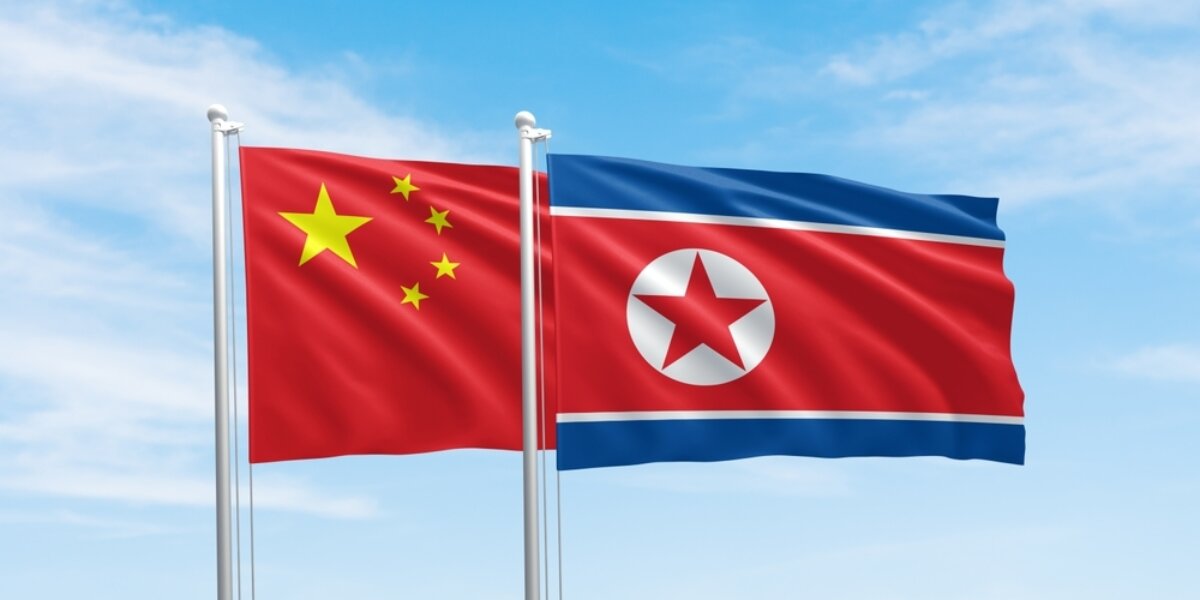
Xi Jinping's visit to Pyongyang came with the familiar choreography of a major state occasion: honor guards, packed squares, references to historical friendship, and reminders of the brotherhood forged during the Korean War. At first glance, the trip appeared to celebrate the strength of a relationship that has lasted for more than sixty years. The strategic significance of the visit, however, may lie elsewhere.
Xi did not travel to Pyongyang simply to reaffirm an alliance. He went to manage a problem. That problem is not North Korea itself, but the growing autonomy Kim Jong Un has acquired in recent years through stronger ties with Russia and China's declining ability to shape North Korean decision-making.
To understand the visit, the central question is not what North Korea wants from China. The question is: what does China want from North Korea?
The answer is certainly not denuclearization. North Korea's nuclear status has made the country both more independent and more strategically valuable. Nor is the answer ideological solidarity. Beijing is looking for four things above all: centrality, stability, predictability, and strategic leverage.
Russia Has Changed the Balance
China's first priority is to preserve its central position on the Korean Peninsula. Over the past two years, the war in Ukraine has significantly altered the relationship between Pyongyang, Moscow, and Beijing. North Korea has become a useful partner for Russia, supplying ammunition, weapons, and even military personnel. In return, Moscow has provided economic support, military cooperation, and diplomatic backing, helping strengthen both North Korea's economy and its military capabilities.
Russia cannot replace China as North Korea's main economic partner. Beijing continues to dominate trade, infrastructure, and the country's economic connections to the outside world. But changing the balance does not require replacing China. It only requires giving Kim alternatives. That is precisely what worries Beijing.
For decades, Chinese influence rested on a simple asymmetry: North Korea needed China far more than China needed North Korea. Russian support does not eliminate that dependence, but it reduces it. Kim now has greater room for manoeuvre and can use competition between Moscow and Beijing to increase his own strategic value.
Seen in this light, Xi's visit was not an attempt to restore control over North Korea. It was an exercise in recalibration. Beijing is adapting to a reality in which its influence can no longer be taken for granted.
The trip therefore looks less like a show of strength than an act of geopolitical maintenance. If China's position were truly uncontested, a visit of this scale would probably have been less necessary.
A Necessary but Difficult Ally
Official narratives often present China and North Korea as natural allies. The reality is more complicated. The tensions between the two countries long predate Pyongyang's recent rapprochement with Moscow. The North Korean leadership has never fully accepted a subordinate role vis-à-vis Beijing. Juche, the ideology built around national autonomy and self-reliance, also emerged from the need to protect the regime's decision-making independence from more powerful partners.
For decades, Pyongyang viewed Chinese economic reforms with suspicion, while many Chinese officials regarded the North Korean leadership as rigid, unpredictable, and resistant to modernization.
The mistrust is not only ideological. In 2013, Kim Jong Un ordered the execution of his uncle Jang Song Thaek, one of Beijing's most important interlocutors within the regime. In the years that followed, a number of figures seen as close to China were sidelined or removed, fueling frustration among Chinese diplomats.
The two societies are also more distant than official rhetoric suggests. For many Chinese, North Korea is primarily a problematic and underdeveloped neighbour. South Korea, by contrast, is seen as a far more important economic, technological, and cultural partner.
This points to an often overlooked paradox. North Korea depends on China far more than China depends on North Korea, while China assigns far greater economic and industrial value to South Korea than it does to Pyongyang.
The Sino-North Korean relationship remains strategically important. That does not mean it is inherently solid.
Why Denuclearization Is No Longer the Priority
Another Chinese priority is stability. For Beijing, the greatest risk is not the existence of the North Korean regime but its possible collapse. A collapse could trigger instability along China's border, generate refugee flows, and ultimately produce a unified Korea aligned with the United States.
This logic helps explain one of the most important shifts in China's policy toward Pyongyang over the past several years: the gradual downgrading of the nuclear issue.
When Xi visited North Korea in 2019, negotiations between Kim Jong Un and Donald Trump were still alive. China and Russia formally supported the UN sanctions regime, and denuclearization remained the stated objective of all the major actors involved.
Today the picture looks very different. Kim no longer treats denuclearization as a negotiable issue. The North Korean leadership now presents its nuclear arsenal as a permanent component of national security. Recent statements describing the country's nuclear status as "irreversible" leave little room for ambiguity.
If Pyongyang's position is logical, Beijing's response reflects the need for pragmatic ambiguity. China still refuses to formally recognize North Korea as a legitimate nuclear weapons state. At the same time, it has become increasingly careful not to make denuclearization the centre of its regional strategy. References to the issue have declined. Public pressure has eased. Stability appears to have replaced disarmament as the main operational priority.
This does not mean China approves of North Korea's nuclear programme. It means Beijing has revised its strategic calculus. Chinese leaders remain concerned about nuclear proliferation and regional rearmament, but they appear to have concluded that serious pressure on Pyongyang would carry costs greater than the likely benefits. Denuclearization survives as a declared objective. Risk management has become the real priority.
What Beijing Really Wants
Taken together, these developments reveal a strategy that is more coherent than it may first appear. China's first objective is to prevent North Korea from drifting permanently into Russia's orbit. It also wants to avoid North Korean provocations that could accelerate security cooperation between the United States, Japan, and South Korea, a grouping Beijing increasingly sees as problematic.
At the same time, the Chinese leadership continues to view North Korea as a useful diplomatic asset in its relationship with Washington. Maintaining a central role in Korean Peninsula affairs means retaining influence over one of Northeast Asia's most important security issues.
There is also an economic dimension that is often overlooked. For years, Beijing has hoped North Korea would introduce limited and carefully controlled economic opening, sufficient to strengthen regime stability and support the economic integration of China's northeastern provinces. A North Korea that is more open economically but not transformed politically would, in many respects, represent an ideal outcome from Beijing's perspective.
In other words, China is looking for a manageable North Korea. Stable enough not to collapse; dependent enough not to escape Chinese influence; prudent enough not to trigger a regional crisis; useful enough to preserve China's central role in the balance of power in Northeast Asia.
The End of an Illusion
For years, China maintained that North Korea could be brought back onto the path of denuclearization.
Xi's visit suggests that phase has come to an end. Beijing still does not formally recognize Pyongyang as a nuclear power, but it appears to have accepted a practical reality: North Korea's nuclear programme is no longer a problem to be solved. It is a condition that has to be managed. The real transformation concerns China's strategy toward North Korea.
Beijing is moving from a policy aimed at changing Pyongyang to a policy centred on managing it in ways that serve Chinese interests. Xi's visit does not mark the return of an old hierarchy, nor does it represent the triumph of the Sino-North Korean alliance. It reflects China's adaptation to a new reality: a North Korea that is more autonomous, more confident in its nuclear status, and more capable of exploiting competition among the major powers.
China intends to keep engaging with that reality from a position of strength, while ensuring that Pyongyang remains close enough not to become an even bigger problem.