
 Back to Insights
Beyond Hormuz
How the Iran Conflict Is Reshaping the Geography of Energy Security. By Emanuele Rossi
Wars often produce strategic consequences that differ from the objectives for which they were fought. The conflict between the United States and Iran may ultimately be remembered not for its military outcome or the future of Iran's nuclear programme, but for accelerating a structural transformation in the Gulf's energy security architecture.
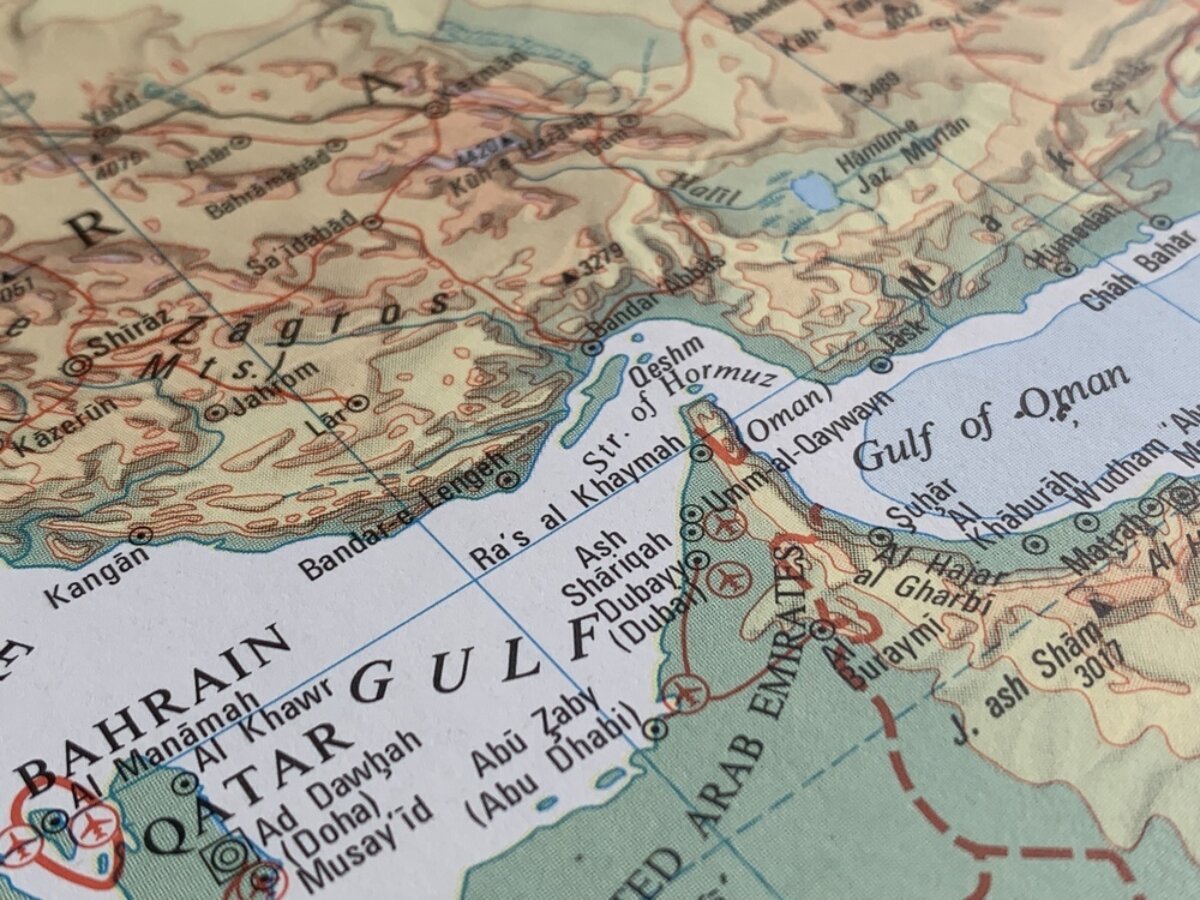
For more than four decades, regional security has rested on a simple assumption: the Strait of Hormuz was both indispensable and irreplaceable. As long as global energy markets—and international trade more broadly—depended on the Strait, the overriding strategic priority was to keep it open through deterrence, forward naval presence and freedom of navigation. That assumption now appears less robust. Not because Hormuz has become less important, but because the conflict has exposed the risks of building global energy security around a single maritime chokepoint.
The most consequential shift concerns the nature of the threat itself. For decades, Iran's ability to disrupt shipping through the Strait remained largely a deterrent capability. Although Tehran had developed the military means to threaten maritime traffic, it had never translated that capability into a sustained strategy of disruption. The conflict altered that equation. In responding to US strikes, Iran demonstrated not only that it possesses the means to target commercial shipping, but also the political willingness to employ them. The lesson is that closing the Strait is no longer necessary to undermine its economic function. Raising the level of risk may be sufficient to deter shipowners, insurers and commercial operators from using the route. The coercive value of a chokepoint therefore depends not only on the ability to block transit, but also on the ability to make it commercially unreliable.
If the strategic imperative for decades was to protect Hormuz, a different logic is now beginning to emerge: reducing dependence on Hormuz.
The objective is not to replace the Strait, which will remain one of the world's most important energy corridors, but to ensure that future crises can no longer paralyse the system as a whole. The centre of gravity is shifting from protecting a single node to strengthening the resilience of the wider network.
The same logic is increasingly visible across critical infrastructure. From supply chains and semiconductors to submarine cables and electricity grids, resilience depends less on protecting individual assets than on ensuring the availability of alternative routes. Energy security appears to be following the same trajectory.
Against this backdrop, the infrastructure investments now being accelerated by the Gulf's major energy exporters take on a broader strategic significance. Saudi Arabia already operates the East-West Pipeline, linking its eastern oil fields to the Red Sea terminal at Yanbu and providing the region's principal alternative to Hormuz. The United Arab Emirates has developed the Habshan–Fujairah pipeline, allowing a substantial share of its crude exports to reach the Gulf of Oman without transiting the Strait. Iraq has likewise revived plans to expand export capacity towards the Mediterranean through the Iraq–Türkiye Pipeline while exploring additional outlets along the Syrian coast. None of these corridors can replace Hormuz. Taken together, however, they point towards an increasingly clear strategic objective: distributing risk across multiple export routes rather than concentrating it in a single maritime passage. If completed or expanded, these projects would significantly increase the share of Gulf exports capable of reaching international markets without passing through the Strait.
The issue, therefore, extends well beyond the construction of new pipelines. What is emerging is a new geography of energy connectivity.
For decades, the Gulf served as the unavoidable convergence point for the region's energy exports. Today, a more diversified network is gradually taking shape, linking the Gulf to the Red Sea, the Gulf of Oman and, potentially, the Mediterranean. At the same time, Iran continues to strengthen overland connections towards Central Asia and China in an effort to reduce its own exposure to maritime vulnerabilities. Although driven by different strategic objectives, both trends reflect the same underlying logic: reducing dependence on single points of vulnerability through greater connectivity.
Viewed across the broader Mediterranean–Red Sea–Gulf–Indian Ocean continuum, this evolution extends well beyond energy security. Strategic competition is becoming less about controlling individual chokepoints and increasingly about building resilient networks capable of reducing their coercive leverage. Energy infrastructure, logistics corridors and commercial routes are therefore emerging as critical instruments of geopolitical competition.
This shift may also reshape the role of the United States in the region. Ensuring freedom of navigation will remain a core strategic interest, and forward naval presence will continue to underpin maritime security. At the same time, supporting infrastructure that reduces the structural vulnerability of regional partners could become an equally important pillar of US strategy. Maritime security and infrastructure connectivity should increasingly be understood not as alternative approaches, but as complementary components of the same regional security architecture.
The ultimate outcome of the conflict remains uncertain, and the Strait of Hormuz will continue to rank among the world's most critical energy chokepoints. Yet its most enduring strategic consequence may already be taking shape. Every crisis strengthens the political and economic incentives to build networks capable of absorbing future disruptions. If this trend continues, the conflict's lasting legacy will not be a new balance of power in the Strait, but the emergence of a new organising principle for twenty-first-century energy security: deterrence will depend not only on the ability to defend a chokepoint, but also on the ability to make it less decisive through network redundancy.