 Back to Insights
Strange tides in the East Med
Now approved by both Tripoli and Benghazi, the 2019 Turkish-Libyan deal is set to redraw alliances throughout the Middle Sea.
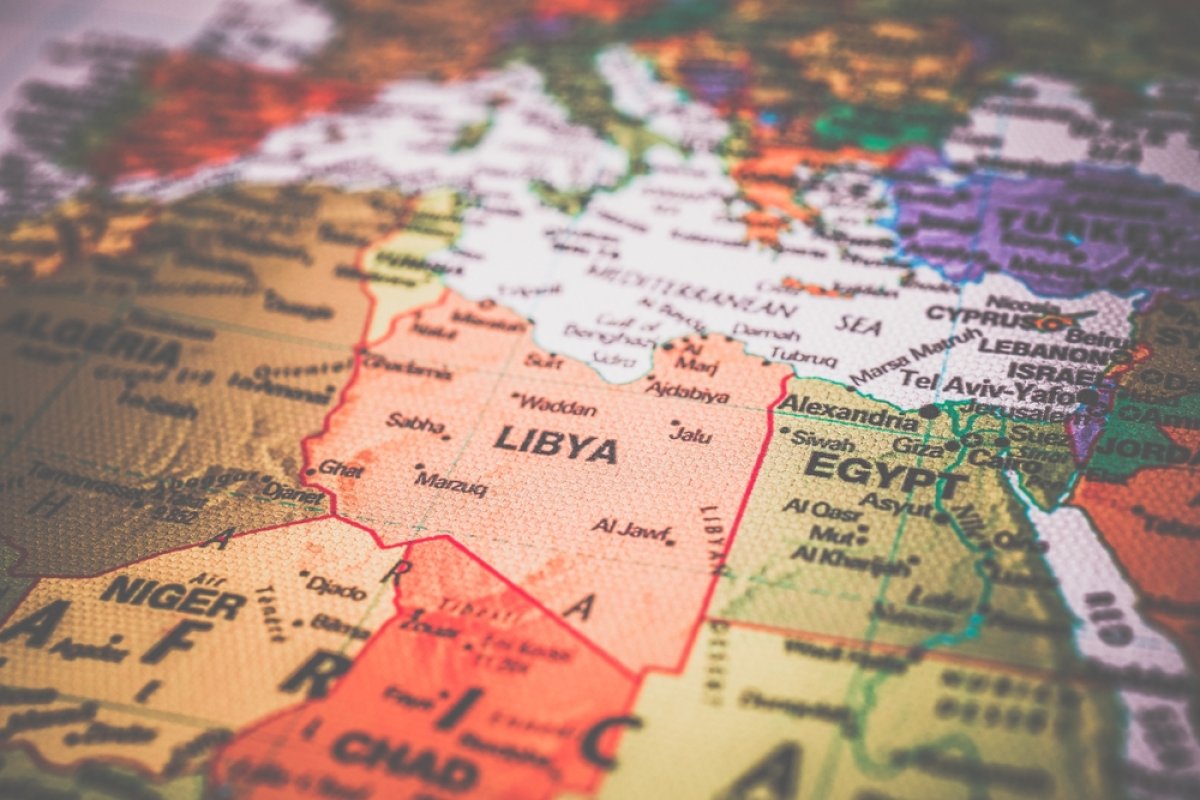
Ankara’s latest victory in Libya has been causing ripples across the eastern Mediterranean. On October 20th the House of Representatives, Libya’s eastern parliamentary body, announced the ratification of a controversial 2019 memorandum to set up a maritime corridor linking Türkiye’s exclusive economic zone (EEZ) with Libya’s. The agreement effectively reshapes the two countries’ maritime boundaries in Türkiye’s favour, granting it access to a stretch of hydrocarbon-rich sea between Crete and the Gulf of Sirte.
In a single strike, Türkiye cements its influence over both governments in Libya and tightens its grip over Mediterranean gas deposits. The latter could allay Ankara’s chronic energy dependence – which forces Türkiye to import about 74% of its energy needs per year – to further bolster its influence over the Middle Sea.
A long and troubled road
The story is remarkably convoluted: the deal was first struck in 2019 by the then-Government of National Accord (GNA) in Tripoli, who aimed to secure Turkish military assistance against warlord Khalifa Haftar’s Libyan National Army (LNA). Rewarded with a promise of Libyan oil and gas, Türkiye’s UAVs proved instrumental in repelling Haftar, who was beaten back from Tripoli in the decisive engagement of the second Libyan civil war.
The ensuing cold peace effectively split the country into two: Haftar entrenched his forces in eastern Libya, setting up a shadow Government of National Stability in 2022, while Türkiye became chief financer and protector of the western government in Tripoli. (In 2021, after a failed attempt at national elections, the latter became the Government of National Unity – GNU – led by Misratan businessman Abdul Hamid Dabaiba.)
While the 2019 deal had saved the western government, the eastern one soundly rejected it. The House of Representatives, who had relocated in Cyrenaica in 2014 and aligned itself with Haftar, denounced the memorandum as a selling out of Libyan sovereignty over national resources. Things, however, began to change soon after. From 2023 onward, Türkiye began to grow increasingly disillusioned about the western government’s ability to make good on its promise, as Tripoli repeatedly fell prey to internal tensions and struggled to consolidate its reach beyond the capital. Haftar, meanwhile, had begun to expand its influence from eastern Libya to the southern reaches of the Fezzan, enjoying support from powerful backers such as Egypt and the United Arab Emirates. Consequently, Türkiye set to work mending ties with the Haftar clan, shifting from the role of Tripoli’s patron to that of diplomatic broker between east and west.
Haftar too saw the benefits of reversing his earlier stance on the 2019 memorandum – hoping perhaps that obliging Türkiye over Mediterranean oil and gas could persuade it to stand aside should the LNA again try its luck on Tripoli. Meanwhile, the ageing general began to cede more power to his sons: his heirs-to-be were soon identified in Khaled, often acting as a liaison with Haftar’s Russian backers, and Saddam, likely chosen to succeed his father as head of the LNA.
Family struggles
The last major obstacle between Türkiye and offshore Libyan gas was now Aguila Saleh, whose mandate as HoR speaker had been stretching on since 2014. By positioning himself as a key conduit between the Haftars and Parliament, Saleh had been able to stave off attempts to end his long tenure and cultivated margins for political autonomy. As most deputies increasingly chafed under his rule, however, Saleh’s opposition to the Türkiye-Libya memorandum triggered his downfall. On October 19th, in Saleh’s absence, a quorum of MPs gathered to amend House regulations and retroactively introduce time limits for the speakership, in what amounted to an official destitution. The next day, the House unanimously voted to ratify the Turkish deal.
Behind this sudden shift was Saddam Haftar, in a distinct hurry to push the memorandum through. Already set up to inherit command of the east, Khalifa’s youngest son was also among the main beneficiaries of the recent US bid to unify Libya’s rival governments into a single polity. According to the plan outlined by Massad Boulos, Donald Trump’s advisor for African affairs, a US-backed transition would see Saddam joining the Presidential Council – Libya’s tripartite head of State – while Dabaiba would retain the premiership from Tripoli. The US, who aim to secure a foothold over Libyan oil and gas and reduce the Russian influence on the Haftars, had been courting Saddam for some years and twice received him in Washington alongside Khaled. To ensure the success of this plan Saddam had also gotten closer to Ibrahim Dabaiba, Abdul Hamid’s ambitious nephew, whose ties to the Haftar clan made him a likely candidate to take his uncle’s place in Tripoli.
Events, however, threatened to outpace Saddam’s designs. His growing favour with Washington had alarmed Khaled, while the elder Dabaiba, fearing being sidelined, redoubled efforts to derail US plans and implicated Saddam in a recent drone attack against Libya's sole working refinery in Zawiya. Fearing such difficulties could imperil his presidential bid, Saddam likely calculated that securing the offshore deposits for Ankara would grant him Türkiye’s political backing and tip the scales against his rivals. (For this very reason Khaled had – reportedly – sent soldiers to block an earlier parliamentary attempt to depose Saleh).
Between Athens, Cairo and Abu Dhabi
The HoR approval is a net success for both Saddam and Türkiye, but it is also stoking tensions among Mediterranean states. Its chief opponent is Greece, as the memorandum includes gas deposits south of Crete that Athens considers its own. Perhaps most importantly, the memorandum would encourage Türkiye to advance in the Aegean Sea and rekindle the historic tensions between Athens and Ankara. To avert this, Greece and Cyprus, who also denounces an infringement upon its waters, had been scrambling to patch up strained ties with the Haftars – especially after condemnation of the deal by the Greek foreign ministry had prompted the family to retaliate by relaxing border surveillance, which exposed Crete to an increase in the arrivals of Sudanese refugees from eastern Libyan ports. Attempts at appeasement, including the launch of economic initiatives and the reopening of a Greek consulate in Benghazi, still proved insufficient to sway Saddam’s course.
As Greek relations with Türkiye and eastern Libya risk becoming more conflictual, the maritime deal may also derail the ongoing rapprochement between Türkiye and Egypt. On opposite sides of regional divides until 2022, Ankara and Cairo had since then sought to smooth their divergences and bolster trade and cooperation. However, Egypt’s opposition to the memorandum – which it says cuts into its own territorial waters – has remained unsolved. After Cairo renewed its condemnation of the deal in the last few days, Ankara floated an offer to review maritime demarcation that would grant Egypt (according to “mutual interests”) “over 15,000 square kilometers” of Turkish waters, in exchange for acquiescence over the Turkish-Libyan deal. A move to which Egypt has yet to respond – and that likely also aims to prevent the revamping of a counter-demarcation deal that Greece and Egypt struck in 2020.
As the eastern Mediterranean boils, with potentially dire impacts for regional cooperation, a visit to Athens by the crown prince of the United Arab Emirates, Mohamed bin Zayed, adds a further layer of complexity. Bin Zayed’s visit on October 21st – which concluded with the signing of several economic MoUs and was ostensibly undertaken to celebrate fifty years of diplomatic relations between Abu Dhabi and Greece –soon doubled as a show of Emirati support for Athens over Cretan gas. The UAE, whose interests in the Red Sea and Sudan run counter to those of both Egypt and Türkiye, would likely welcome a rift between the two and may work to deepen it should the occasion arise.
The European Union has meanwhile joined the chorus of opponents, prompted by vocal pressure by both Greece and Cyprus. In an official statement by its High Representative, the EU “deplored” the HoR’s approval of the memorandum, which violates the 1984 UN Convention on the Law of the Sea (UNCLOS): neither Libya nor Türkiye, however, ever ratified the latter. This clash presents a particular problem for Italy, an EU member who has sought to strengthen ties with Libya, Türkiye and Egypt to preserve its Mediterranean interests. It may also provide an opportunity to defuse tensions through diplomatic engagement. As domestic and foreign fronts converge, in any case, the eastern Mediterranean heads into troubled waters.