 Back to Insights
Africa’s Stake in the Future of the UN and its Relevance for Europe
The article by Abdul Mohammed
The article that follows is written from an African perspective, but its central argument is equally European. For Europe, multilateralism is not merely an instrument of foreign policy. It is the political method through which the continent rebuilt itself after two catastrophic wars and transformed recurrent rivalry into relative peace, integration and shared prosperity.
The post-war European project rested on a revolutionary proposition: national interests could be protected more effectively by pooling elements of sovereignty than by relying on competing national power. Beginning with coal and steel, the material foundations of warfare were placed under common authority. Law, institutions and economic interdependence became instruments of prevention. The European Union is therefore not simply a Brussels bureaucracy. It is the world's most developed regional multilateral system and one of history's great peace projects.
That history remains strategically relevant. Europe cannot secure collective defence, economic security, technological sovereignty or global influence through 27 disconnected national strategies. NATO rests on a multilateral commitment, while the EU's single market and evolving common foreign, security and defence policies multiply the influence of its members. No European state can alone shape the rules governing trade, climate, artificial intelligence, public health, international finance or peace and security. In an unequal international order, European sovereignty is often made effective through collective action.
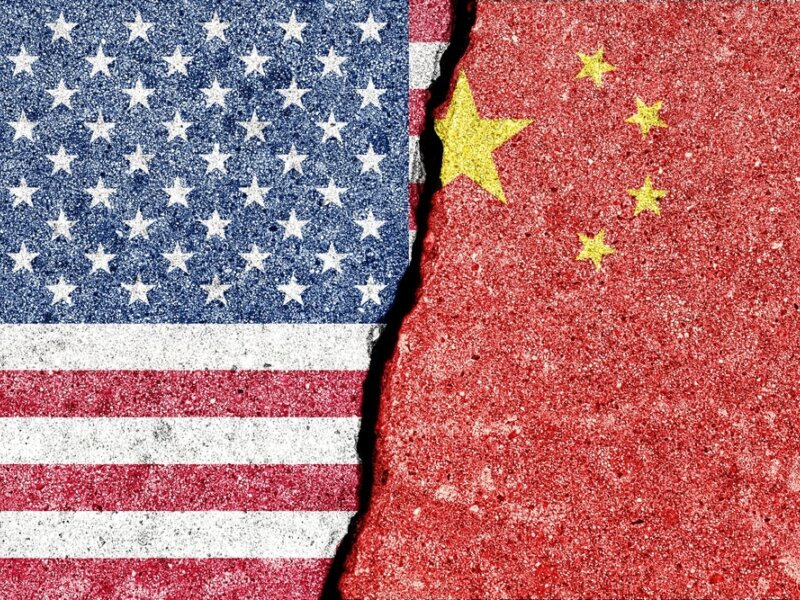
This is why recent American arguments matter. At the 2025 Munich Security Conference, Vice President J.D. Vance said Europe's greatest danger came not from Russia or China but "from within." He attacked Brussels and mass migration and invoked Davos as the symbol of an elite that treats citizens as "interchangeable cogs of a global economy." The 2025 United States National Security Strategy formalized this argument: it warned of European "civilizational erasure," blamed the EU and other transnational bodies for undermining sovereignty, praised "patriotic European parties" and raised the prospect of NATO countries becoming "majority non-European."
Secretary of State Marco Rubio's 2026 Munich address was more conciliatory but remained within the same framework. He affirmed that America and Europe belong together and argued for reform, rather than destruction, of international institutions. Yet he also said the "so-called global order" could no longer be placed above national interests, rejected "outdated globalist structures" and linked Western survival to stronger borders and renewed cultural confidence. These interventions are not simply disputes over defence spending. Together, they advance an alternative theory of Europe.
None explicitly endorses white nationalism. But their demographic and civilizational framing gives strategic respectability to a racialized and ethno-nationalist understanding of European identity. Europe should answer clearly: multilateralism is not an existential threat to European civilization. It is one of Europe's greatest post-war achievements and remains at the heart of its defence. The EU's democratic, institutional and strategic deficiencies require reform, not retreat.
Defending multilateralism also requires Europe to engage the more plural order emerging beyond the traditional West. I would advocate that the European Union itself, rather than individual member states acting separately, seek institutional participation in BRICS as a union. Full membership would require adaptation of BRICS' state-based arrangements, but observer, institutional-partner or permanent-dialogue status could be a practical first step toward it. The G20 provides a precedent: the EU and AU participate as regional bodies alongside states, with the AU admitted as a permanent member in 2023. BRICS should create comparable space for regional unions.
Such engagement would not require Europe to endorse every BRICS position or abandon its transatlantic relationships. It would allow Europe to engage leading Global South powers collectively, reduce rigid bloc polarization and help shape an increasingly influential forum. Above all, Europe should engage as a union. Fragmented national initiatives would weaken Europe's common strategic agency.
Europe and Africa therefore have a substantial agenda on which to work together: UN and Security Council reform; consistent application of international law; transformation of the international financial architecture; debt, development and climate justice; governance of artificial intelligence and other global public goods; prevention and mediation; and more equal partnerships among the UN, AU, EU and regional organizations. Their purpose should be to co-author a more representative, equitable and effective multilateral order, not to preserve an inadequate status quo.
Preserving an international order anchored in norms, principles and collective institutions is a first-order national and continental interest for both Europe and Africa. The objective cannot be to restore yesterday's order unchanged, but to build a more inclusive and democratic order in which multilateralism remains the anchor. Without that anchor, multipolarity will degenerate into transactional rivalry, spheres of influence and the rule of power.
The selection of the next Secretary-General of the United Nations comes at a moment when the institution he or she will lead is confronting perhaps the gravest crisis of relevance, authority and confidence since its establishment eighty years ago. This is not simply another leadership transition within an international organization. The international order is not merely changing, but the multilateral foundations on which it once rested are being progressively weakened, through geopolitical rivalry, selective adherence to international law, declining political investment and, increasingly, preferences for unilateral and transactional arrangements. The UN finds itself having simultaneously to defend its own relevance, protect the principles of its Charter, and respond to global crises whose scale makes international cooperation more necessary than ever.
For Africa, this is not an ordinary institutional crisis. The weakening – let alone the possible demise – of effective multilateralism constitutes an existential strategic threat to the continent. Africa consequently has reason to be more invested, more vocal and more politically engaged in defending and renewing multilateralism than any other region. Yet that urgency is not sufficiently visible in African diplomacy or in the debate surrounding the selection of the next Secretary-General. This contradiction should concern us.
THE RETREAT FOR MULTILATERALISM SHOULD ALARM AFRICA
Major powers can navigate, and some may even believe they can prosper in a weakened multilateral order. They possess military power, economic leverage, technological capacity, privileged positions in global finance, and bilateral networks through which they can pursue their interests. They can use multilateral institutions when convenient and bypass them when they are not. Africa does not enjoy the same luxury. For Africa, multilateralism is not an á la carte proposition. Our stake in it is comprehensive. Peace and security, development, climate action, international finance, humanitarian protection, public health, migration, trade, technology governance and the protection of sovereignty all depend, in varying degrees, upon functioning international institutions, agreed rules and collective action. International law matters most to those who cannot rely upon power alone.
This is why the current retreat from multilateralism should alarm Africa. The crisis did not begin yesterday. For more than a decade, geopolitical rivalry, paralysis in the Security Council, weakening respect for international law, unequal globalization and growing distrust of international institutions have accumulated.
The wars of recent years, including Gaza, have further exposed the selectivity with which international norms are sometimes applied and have damaged confidence in the universality of the system. More recently, policies pursued by the current United States administration have accelerated the retreat from multilateral approaches, reducing support for international institutions and privileging bilateral bargains, narrower coalitions and national power. Whatever the stated rationale, the practical effect is to weaken institutions, make collective rules more negotiable and increase the premium on power.
Other major powers remain formally committed to multilateralism, but none appears ready to assume the political burden of defending and reinventing the existing order. China continues to affirm support for the United Nations while considering how an evolving architecture can better reflect a multipolar world and its own interests. We are therefore entering an interregnum: the old order is losing authority before a new one has acquired legitimacy or coherent institutional form. Africa should be under no illusion about what this can mean for a continent whose influence depends heavily on rules, institutions and collective agency.
CONSEQUENCES FOR AFRICA'S MULTILATERAL INSTITUTIONS
The global retreat from multilateralism does not stop at Africa’s shores. Its continental manifestation may be equally consequential. A world increasingly organized through bilateral transactions between unequal states can weaken the African Union and the regional economic communities, circumvent common African positions, and reward fragmented national bargains over continental approaches. It can encourage external powers to deal selectively with individual states and transform Africa once again into an arena in which others compete, rather than a political space in which Africans collectively exercise agency. In its most dangerous form, this tendency threatens a new balkanization of Africa – not necessarily through the redrawing of borders, but through the fragmentation of African political purpose.
A retreat from multilateralism runs directly against the trajectory Africa has pursued since independence: from decolonization and the Organization of African Unity to the AU; from regional economic communities to the African Continental Free Trade Area; from collective security to the continuing quest for greater political and economic integration. These institutions are imperfect, and too often African governments themselves fail to invest in them politically and financially. But they embody a fundamental Pan-African insight: individually, most African states possess limited leverage in the international system, however, collectively, Africa can exercise consequential agency. The defence of global multilateralism and the defence of African multilateralism are therefore inseparable.
AFRICA SHOULD BE CONCERNED ABOUT THE SELECTION OF THE NEXT SECRETARY-GENERAL
This is also why Africa’s present disposition toward the selection of the next Secretary-General is inadequate at the moment. The selection process is already well advanced. Candidates have presented their visions in public interactive dialogues and a General Assembly town hall, and the Security Council has begun its consideration. Yet Africa has not generated the continental debate that the stakes require. The continent has rightly been persistent on the issue of representation, including the long-overdue reform of the Security Council. But representation alone is not a strategy for multilateral renewal. Africa needs a position on the future of multilateralism itself, and the selection of the next Secretary-General should have been an obvious catalyst for articulating it.
The continent should by now be asking, collectively and publicly: what kind of United Nations does Africa require in the coming decade? What must be preserved, what must be reformed, and what must be reinvented? What qualities should the next Secretary-General possess to navigate a period in which the institution may have to fight for both its relevance and its political space? And what commitments should Africa expect from candidates on peace and security, development, international financial reform, climate justice, Security Council reform and partnership with African institutions? These are not questions to be left to New York diplomacy alone. They concern Africa’s strategic future.
Nor should Africa reduce its judgment to conventional regional rotation or to support for one personality. The next Secretary-General may emerge from the region whose turn is widely considered due, and the current field includes several highly experienced candidates. The more important African responsibility is to establish the political and leadership test against which any candidate should be assessed. The question is not simply who can administer the United Nations. It is who can help navigate the organization through this turbulent transition while contributing to the reinvention of multilateralism for a world that still desperately needs it.
THE NEXT SECRETARY-GENERAL MUST BE A COMPETENT AND INDEPENDENT LEADER
The next Secretary-General cannot be merely a custodian of institutional survival. He or she must be a political leader of unusual competence, independence and judgment: firmly anchored in the Charter; capable of engaging the great powers without becoming captive to them; credible to the Global South; attentive to smaller states; and sufficiently imaginative to understand that defending multilateralism does not mean defending every feature of the status quo. The existing order requires reform precisely because its inequities and failures have contributed to its loss of legitimacy. Africa cannot be asked to defend indefinitely an international system that marginalizes Africa. Renewing multilateralism must therefore include democratizing it.
The Pact for the Future adopted at the Summit of the Future provides elements of such an agenda, but declarations will not restore confidence. The next Secretary-General must translate agreed commitments into political purpose and practical delivery. Multilateralism will survive only if states and citizens can see its value. That means restoring prevention, mediation and political settlement to the centre of international peace and security; defending international law consistently rather than selectively; advancing meaningful Security Council reform; supporting reform of the international financial architecture; mobilizing collective action on climate change; and developing workable regimes for global public goods, including public health, food security, digital governance, artificial intelligence and the global commons.
THE UN MUST PURSUE EQUAL PARTNERSHIPS WITH AFRICAN INSTITUTIONS
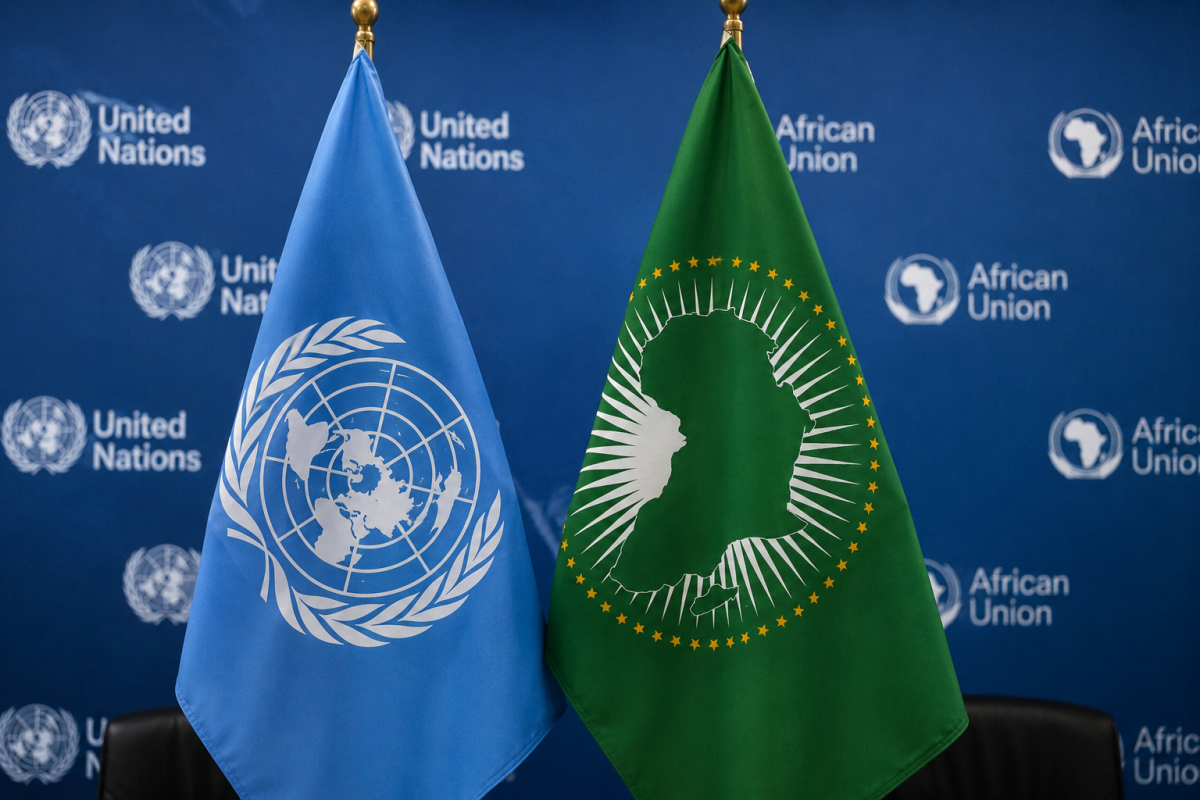
For Africa, one additional priority is indispensable: a qualitatively stronger relationship between the UN, the African Union and the Regional Economic Communities. The future of multilateralism will not be constructed solely in New York. It will increasingly depend upon legitimate and capable regional institutions with political knowledge, proximity and operational capacity. The UN should not treat African institutions merely as implementing partners after decisions have been made elsewhere. Partnership must increasingly mean shared political analysis, early consultation, complementarity, predictable support and respect for African agency. Strengthening African multilateralism is part of strengthening global multilateralism.
Africa must, however, also look inward. We cannot demand multilateralism internationally while weakening it continentally. We cannot insist upon African agency in global forums while Member States circumvent African institutions whenever collective decisions become inconvenient. Nor can we credibly resist external transactionalism while reproducing it among ourselves. The African Union and Regional Economic Communities require political investment, predictable financing and a willingness by Member States to treat collective positions as strategic assets rather than optional declarations. The credibility of Africa’s defence of the United Nations begins with our willingness to defend and strengthen our own multilateral institutions.
AFRICA MUST DECIDE WHAT IT WANTS FROM THE UN AND THE NEXT SECRETARY-GENERAL
The selection of the next Secretary-General should therefore serve as a wake-up call. Africa needs a common strategic conversation and, where possible, a common position – not necessarily about a particular individual, but about the mandate history is imposing upon whoever assumes the office. The AU should help convene and give political expression to that conversation. African governments and diplomatic missions should engage candidates systematically against an agreed set of priorities. African intellectuals, policy institutions and civil society should debate the future of multilateralism as an African strategic question rather than as a distant institutional concern. Silence is itself a position, and at this historical moment it is the wrong one.
The next Secretary-General will take office during an international transition whose destination remains uncertain. The UN may emerge diminished, reduced to managing humanitarian consequences while political decisions migrate elsewhere, or it may use this crisis to reinvent itself as an indispensable platform for managing shared problems. Much will depend upon Member States, particularly the major powers. But leadership matters. A Secretary-General cannot manufacture political will, but he or she can define choices, defend norms, convene coalitions, use good offices creatively and remind states of the costs of abandoning collective solutions.
Africa cannot determine that future alone. But neither should Africa permit others to determine it in its absence. For a continent whose quest for sovereignty, development, integration and international agency has been inseparable from collective institutions, the survival and renewal of multilateralism is not somebody else’s agenda. It is an African strategic interest of the first order. Africa should therefore speak earlier, louder and more coherently than it presently does – not because the United Nations as it exists is adequate, but because a world without effective multilateral institutions would be considerably more unequal, more transactional and more dangerous for those without great-power capabilities.
The selection of the next Secretary-General gives Africa an opportunity to state clearly what kind of international order it intends to defend, what kind it intends to reform, and what kind of leadership it expects. It is also an opportunity for Africa to rediscover an essential truth of the Pan-African project: collective agency is not an aspiration added to national interest; in an unequal international system, it is one of the principal means through which national and continental interests can be protected. Africa should seize this moment – not merely to help select the next Secretary-General of the UN, but to insist upon its place as a co-author of whatever multilateral order comes next.