 Back to Insights
Nepal’s Electoral Turning Point
More than six months after the wave of unrest that shook Nepal, the country returned to the polls on 5 March 2026 to elect a new House of Representatives. The outcome marked a decisive breakthrough for the political force that most clearly embodied the legacy of those protests: the Rastriya Swatantra Party (RSP), led in this election by the young former mayor of Kathmandu, Balendra Shah.
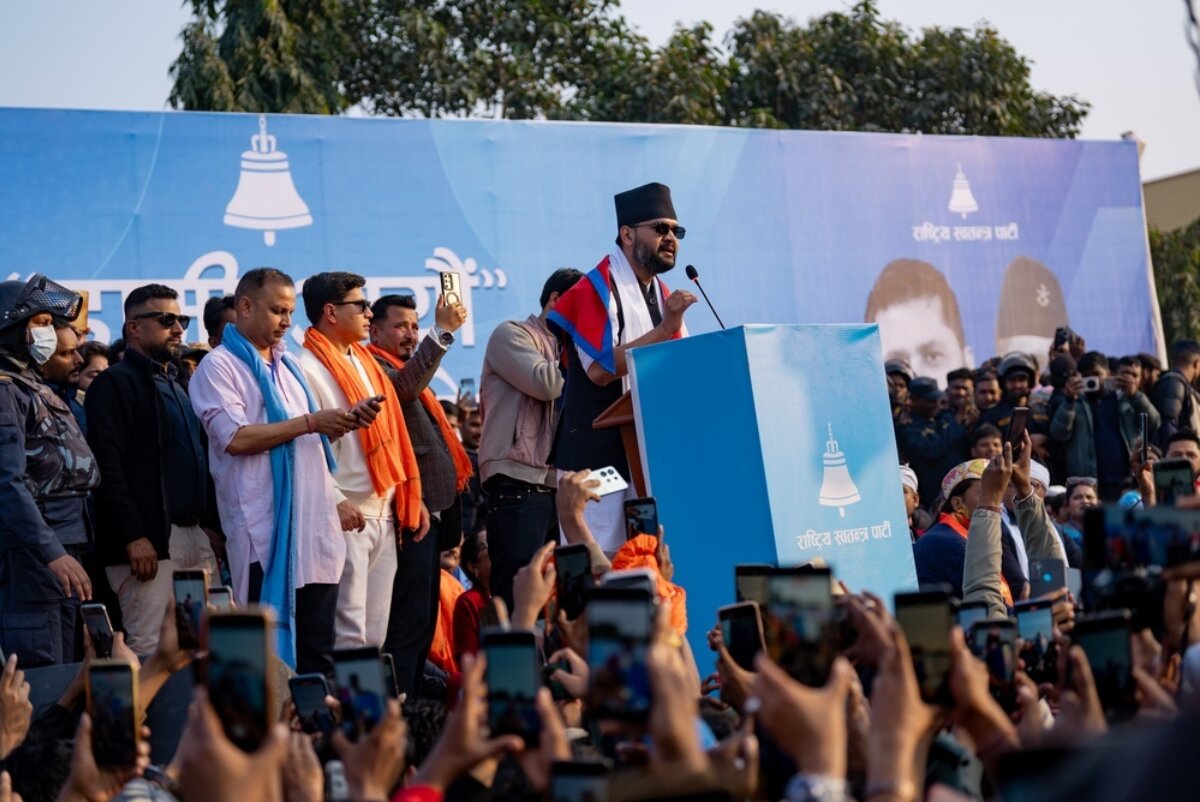
On 5 March 2026, Nepal held general elections to renew the House of Representatives, the lower chamber of Kathmandu’s bicameral Parliament, following the riots that in September 2025 had led to the resignation of the government then in office. In accordance with the current mixed electoral system, which allocates 165 of the 275 seats through a single-member majoritarian system and the remaining 110 on a proportional basis, the Rastriya Swatantra Party (RSP), led in this electoral contest by the young former mayor of Kathmandu, Balendra Shah, secured a clear victory, thereby gaining the possibility of forming an RSP-led government. On 27 March, Balendra Shah was sworn in as prime minister of Nepal.
The scale of this result is particularly striking when compared with the party’s performance in the 2022 elections, when it had still been regarded as a secondary political force. By contrast, the March 2026 election established the RSP as the dominant actor in Nepalese politics, well ahead of the country’s traditional parties. The Nepali Congress won 38 seats, while the coalition led by the Communist Party of Nepal – Unified Marxist Leninist (CPN-UML) secured 25. [1]
This electoral outcome comes at a particularly sensitive juncture for Nepal. In September 2025, violent protests against the government and state authorities left 76 people dead and more than 2,000 injured, in what was widely seen as the gravest domestic crisis since the abolition of the monarchy in 2008. What began as opposition to the government’s decision to block twenty-six digital platforms soon developed into a far broader challenge to the political order. [2]
The ban had been justified on the grounds that the platforms had failed to comply with regulatory requirements stemming from directives issued by the Supreme Court of Nepal. Under the proposed framework, all digital platforms operating in the country were to register with the Ministry of Communications and Information Technology and accept oversight over content deemed “undesirable”, under penalty of suspension. Yet the unrest rapidly moved beyond the issue of digital regulation itself. Driven above all by younger Nepalese and influenced in part by the example of similar protest movements in South Asia, particularly in Sri Lanka and Bangladesh, the demonstrations gradually evolved into a broader expression of public discontent directed not only at the government, but also at the corruption and privileges associated with Nepal’s political establishment.
The crisis reached its peak on 8 September, when protesters surrounded and breached the Parliament in Kathmandu, while unrest spread simultaneously to other cities and targeted public buildings and official residences. In the days that followed, the government lifted the restrictions on the digital platforms, and on 9 September several senior officials resigned, including Prime Minister K.P. Sharma Oli. An interim administration was then established, and fresh elections were called. Together with the intervention of the army, these measures contributed to a partial stabilization of the country.
Seen in this light, the March 2026 elections were not an isolated event, but rather the institutional continuation of the political rupture that had opened the previous autumn. The RSP’s success, built on a campaign centered on criticism of the existing system and on the symbolic appeal of generational change, reflects both the enduring political legacy of the protests and the deeper structural weaknesses affecting Nepal.
Since becoming a republic in 2008, Nepal has struggled to achieve lasting political stability. Fourteen governments have taken office in the intervening years, and none has completed a full term. This chronic instability has been accompanied by persistent economic fragility. Although the country recorded growth of 4.61% over the past year, up from 3.67% in 2023/2024[3], the broader picture remains uncertain. In 2025, overall unemployment stood at 10.5%, while among those aged 15 to 24 it reached 20.8%, according to World Bank data. This is especially significant in a country where more than 40% of the population is under 35[4]. At the same time, Nepal continues to rely heavily on labour migration. A large share of the working-age population is employed abroad, and in 2024 alone an estimated 741,000 Nepalese left the country in search of work, mainly in the Gulf states, Malaysia, and India. Remittances therefore remain central to the national economy, accounting for more than 26% of GDP and amounting to roughly USD 11 billion.
Against this political, economic, and social backdrop, the March 2026 election represents a major turning point. Nepal appears poised to be governed by a political force closely associated with the younger generation that drove the September 2025 protests. Whether that promise of renewal can be translated into effective government, however, remains uncertain. Considerable doubts persist as to the new majority’s capacity to convert electoral momentum into concrete action. These uncertainties are compounded by Nepal’s international position. The country lies between India and China, both of which maintain relations of fundamental importance with Kathmandu, albeit in different forms and to different ends. Nepal’s location along the Himalayan arc further enhances its strategic value, particularly with regard to water resources, as this region feeds river systems that are vital to much of South and South-East Asia. In this respect, the political and economic consequences of climate change only add to the country’s growing geopolitical significance.[5]
[1] https://www.bbc.com/news/artic...
[2] https://www.reuters.com/world/...
[3] https://www.nrb.org.np/content...