 Back to Insights
The Geopolitical Value of the African Journey and the Human Capital Development Agenda
We republish the article originally featured in Il Messaggero on April 16, 2026.
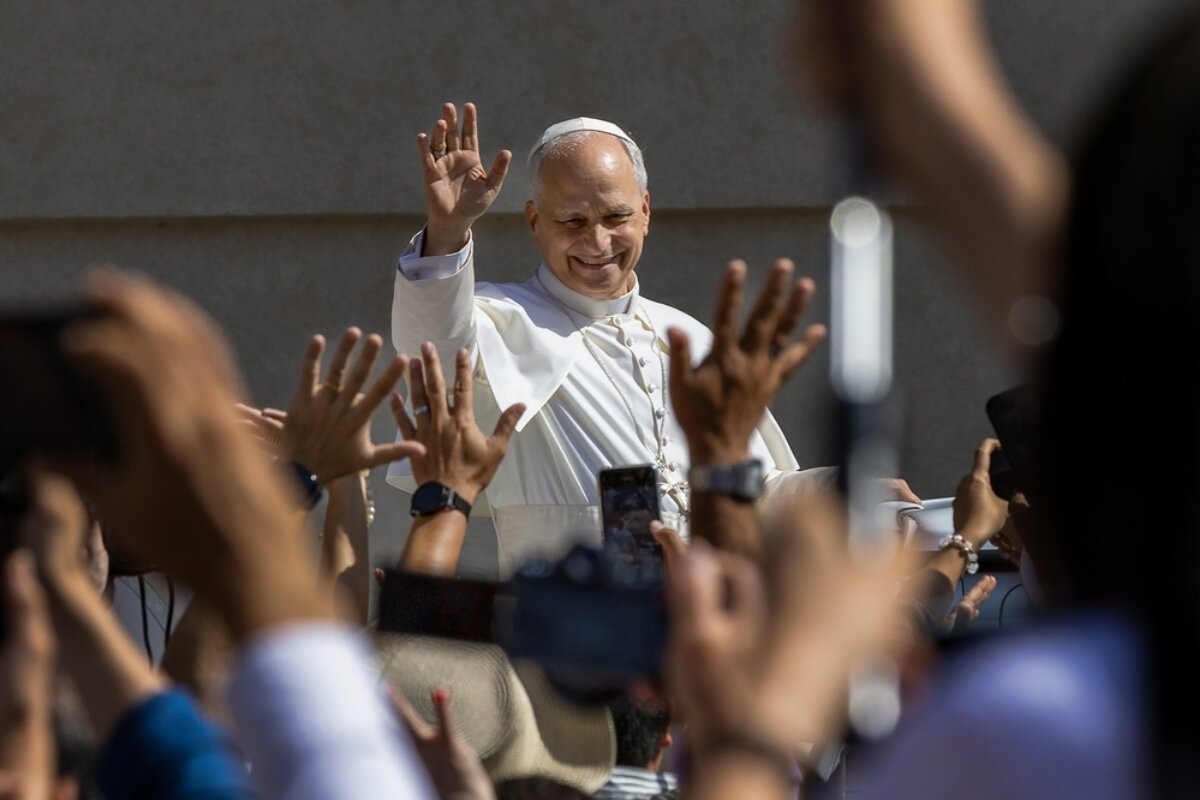
The selection of destinations for Pope Leo XIV’s journey to Africa (Algeria, Cameroon, Equatorial Guinea, and Angola) carries a dual significance. On the one hand, it reaffirms the centrality of the “young continent” for the Holy See; on the other, it outlines the doctrinal and geopolitical trajectory that the Pontiff has sought to develop since the beginning of his magisterium. In this sense, the agenda of visits confirms the priorities and strategic objectives of the Prevost pontificate.
Let us begin with a key point that must always be borne in mind: in Africa, the Catholic Church represents a demographic and sociopolitical power. The number of faithful has grown from 185 million in 2013 to 288 million in 2024. This dynamic is not solely the result of the continent’s demographic growth, but also of intense mediation efforts and of the implementation of a social doctrine that sees the Vatican actively engaged on the front line. Initiatives originally conceived as purely humanitarian interventions have evolved into a genuine human capital development agenda, which received strong momentum under Francis I and which Leo XIV now intends to consolidate.
To understand the extent of this political influence, a few examples suffice: in the Democratic Republic of Congo — a country at the center of US-China competition — the Church has for decades been the principal actor in welfare provision and a guarantor of political balance, even positioning itself, when necessary, as a true opposition force. The CENCO (National Episcopal Conference of Congo) is currently the country’s most authoritative electoral observer; after helping to avert a civil war in 2016, it has, over the past year, opposed the constitutional reform proposed by President Tshisekedi aimed at securing a third term. In the sphere of intercommunal relations, actors such as the Community of Sant’Egidio continue to operate as leading mediators in dormant yet persistent conflicts, such as the one in Casamance (Senegal). More recently, in response to accusations of “genocide against Christians” raised by U.S. President Donald Trump against the Nigerian government, figures such as the Archbishop of Sokoto, Matthew Hassan Kukah, have intervened firmly to refute such simplifications, thereby safeguarding the complex system of coexistence between Muslims and Christians in the country. In short, few actors can claim such deep knowledge of the continent and such a widespread presence as the Vatican.
Pope Leo XIV’s apostolic journey to Africa, beyond reinforcing the continent’s centrality in Vatican geopolitical mapping, also traces a line of continuity with his predecessor. The stop in Algeria—opened with a tribute at the Maqam Echahid, the monument to the martyrs of independence, and followed by a historic visit to the Great Mosque of Algiers—confirms the intention to foster interfaith and Mediterranean dialogue grounded in fraternity and détente, recognizing the right to self-determination as one of the key foundations of such engagement. Moving into the heart of Christian Africa, Cameroon offers a measure of the mass dimension of local Catholicism, with six hundred thousand faithful expected in Douala; yet the visit goes beyond liturgical celebration. Here, the Pope addresses the issues of social justice and the intergenerational pact in a context where the government led by the ninety-two-year-old Paul Biya appears increasingly detached from the demands of a very young population—with an average age of 18—that calls for inclusion and guarantees for political participation. These themes become even more pronounced during the stop in Equatorial Guinea, which represents the ethical apex of the mission. Recalling the 2021 Bata explosion, caused by the negligent management of an arsenal, Leo XIV transforms a forgotten national wound into a symbol of the “culture of care.” The prayer among the ruins of Nkoantoma becomes the central act of a denunciation of governmental neglect and corruption, calling for justice for lives sacrificed on the altar of misrule. The importance of sound public governance and the implementation of an inclusive social agenda stands at the core of the final stage of the journey: Angola. This nation, strategic for the Lobito Corridor and rich in natural resources, remains afflicted by extreme poverty affecting 36% of its citizens. The prayer at the Sanctuary of Mama Muxima, patron virgin of Angola, thus serves as a warning against the uncontrolled exploitation of resources and the pursuit of exclusionary economic growth.
These tree distinct stages offer a concrete vision of how Prevost views the world: collective, divided, and diverse—a framework of analysis that, in times of war such as the present, could be applied to many regions beyond Africa. In essence, rather than a periphery, Africa becomes a mirror. Through this apostolic journey, Leo XIV seems to ask: who will have the courage to confront the image reflected within it?