 Back to Insights
The SCO and the Paradoxes of Multipolarity
The article by Emanuele Rossi
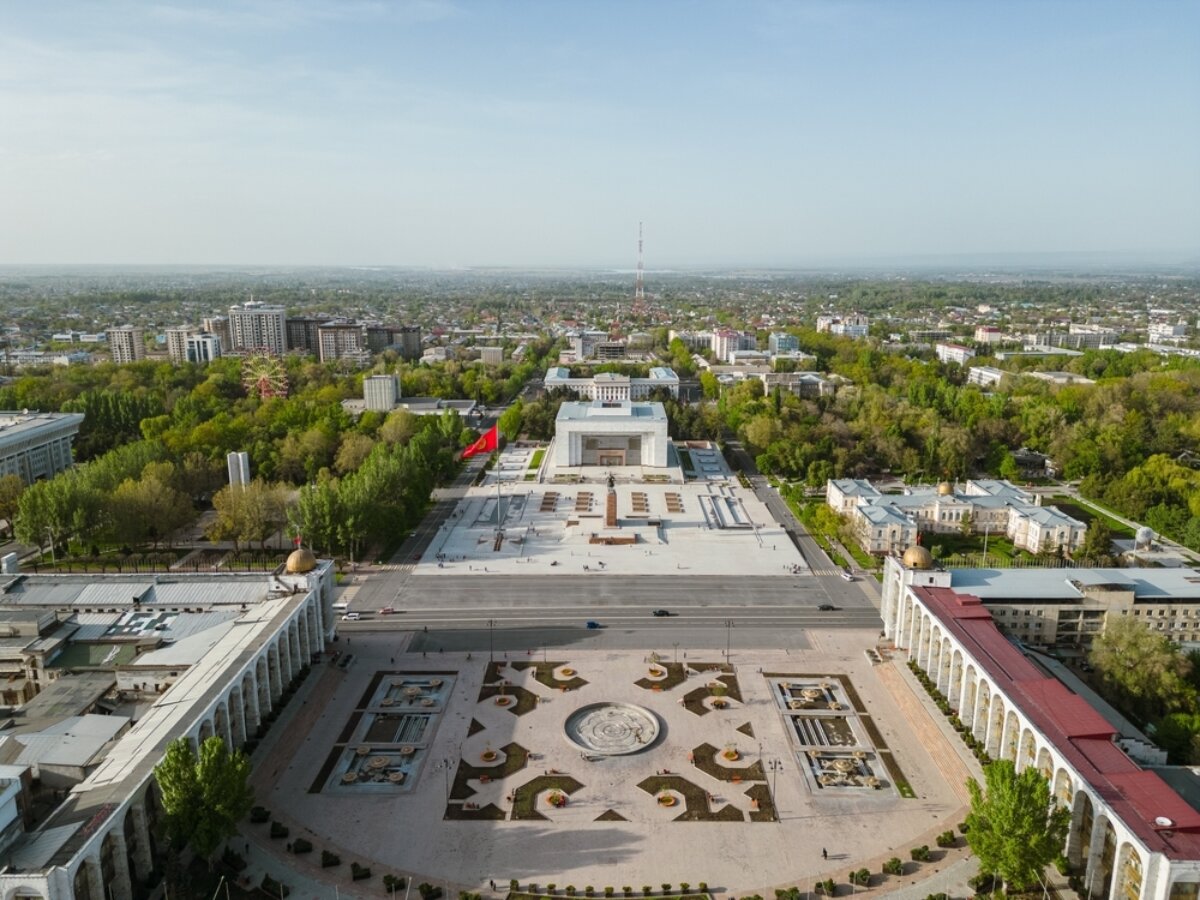
The latest summit of the Shanghai Cooperation Organisation (SCO) offered an apparently compelling illustration of the ongoing rebalancing of the international system. By bringing together China, Russia, India, Iran and the Central Asian republics, alongside its other members, the summit demonstrated the SCO’s ability to represent an increasingly significant share of not only the Eurasian political space but also the global one, given the weight of several of its members. It also gave expression to demands for an international order less centred on Western institutions and priorities. Yet the political significance of the gathering was accompanied by relatively modest tangible outcomes. This gap between representation and the capacity for collective action provides a useful starting point for understanding what the SCO has become after 25 years of evolution.
Established primarily to address security concerns among China, Russia and the Central Asian states, the SCO has gradually developed into a platform encompassing powers with global ambitions, regional actors and states primarily concerned with preserving room for manoeuvre. Expansion has increased both its representativeness and political weight, while making it more difficult to generate sufficiently strong common interests to underpin meaningful collective action. The construction of a multipolar order is now firmly embedded in the organisation’s vocabulary, and the idea has appeal beyond its current membership, including among external partners and prospective members. But a considerable gap remains between this ambition and the instruments available to pursue it. Even in the security domain, the original focus of cooperation, enlargement has not produced a corresponding ability to respond collectively to crises involving SCO members, as illustrated by the limited role played by China, Russia and India in the confrontation between Iran and the United States.
It is precisely the SCO’s three major powers that assign different functions to the organisation and pursue objectives through it that only partially overlap. Beijing’s growing economic and political weight across Eurasia makes the SCO one of several vehicles through which China can consolidate regional relationships and advance its preferred vision of international governance. Yet material pre-eminence does not translate automatically into leadership accepted by the organisation’s other members.
Moscow, meanwhile, continues to regard Central Asia as central to its security and regional influence, even as it adjusts to an increasingly asymmetric relationship with China. The SCO allows Russia to preserve status and an institutional presence in Eurasia without removing the implicit competition with Beijing over the region’s future configuration. For India, the organisation remains an instrument of its Eurasian diplomacy and its preference for a more balanced distribution of international power, without implying an explicitly anti-Western orientation. The SCO is compatible with India’s pursuit of strategic autonomy precisely because it enables New Delhi to cooperate with China and Russia without requiring exclusive alignment.
These divergences are not anomalies that will necessarily disappear as the organisation matures. They are a defining feature of the contemporary SCO. Sino-Indian tensions, the growing asymmetry between Russia and China, differing perceptions of regional security and the autonomous interests of the Central Asian states all constrain the organisation’s ability to evolve into a coherent geopolitical bloc. Further enlargement may reinforce this dynamic, increasing the SCO’s representativeness while making common positions more difficult to achieve.
Yet this weakness also helps explain the organisation’s resilience. Assessing the SCO solely by its ability to produce binding decisions risks underestimating its political function. It provides its members with a setting in which to manage difficult relationships, maintain channels of communication and participate in an international platform that is not organised around Western leadership. For smaller states, particularly in Central Asia, access to multiple interlocutors can increase their room for manoeuvre among larger powers. Limited integration may therefore be, at least in part, the price of the organisation’s breadth: none of its major members needs to regard the SCO as indispensable for all of them to continue to find it useful.
It is at this point that the significance of the summit extends beyond the organisation itself. The SCO taps into a growing demand for greater representation in the international system that is neither exclusive to China and Russia nor necessarily synonymous with an attempt to replace the existing order with one built around alternative institutions. The leadership of the United Nations, speaking at the summit in Kyrgyzstan, itself acknowledged the need to adapt structures of global governance to a distribution of power different from that on which they were built in the aftermath of the Second World War, identifying reform of international institutions as part of the response to increasing multipolarity.
Beijing can seek to harness this demand by presenting itself as an advocate for greater representation of the non-Western world and by using platforms such as the SCO to reinforce that position. But demands for multipolarity do not automatically amount to acceptance of Chinese leadership. Many of the states seeking a redistribution of international power are primarily interested in greater autonomy, bargaining power and freedom of choice. They may share Beijing’s criticism of aspects of the existing order without necessarily sharing its strategic interests or its conception of global governance. In this respect, the SCO offers a revealing illustration of emerging multipolarity: selective convergence, shifting coalitions and institutional affiliations that do not necessarily determine political alignment.
For Western countries, viewing the SCO exclusively through the lens of geopolitical confrontation therefore risks attributing to it a coherence it does not possess and, more importantly, obscuring differences among the interests of its members. It would be equally misleading, however, to infer from its institutional weaknesses that the organisation lacks political significance. The ability of China and Russia to help sustain platforms through which a significant part of the non-Western world can articulate dissatisfaction with the existing distribution of power matters in its own right. Distinguishing between contestation of the international order and opposition to the West is therefore essential. Treating every demand for greater representation as a product of Chinese or Russian influence risks strengthening Beijing’s ability to present itself as the natural interlocutor for countries that consider their interests insufficiently represented.
Twenty-five years after the SCO’s creation, the latest summit may ultimately tell us more about the transformation of the international system than about the organisation’s own strength. The SCO remains too heterogeneous to constitute an alliance and too weakly institutionalised to become the centre of an alternative order. Yet its persistence can be explained in part by its ability to accommodate within a single platform actors with divergent interests and strategies. The multipolarity emerging across Eurasia does not resemble the straightforward replacement of a Western-dominated order by a new bloc organised around China. Rather, it points towards a system in which a growing number of actors seek greater representation, autonomy and the ability to choose among different partnerships. The SCO embodies many of the contradictions inherent in this process and, for precisely that reason, remains a useful lens through which to assess its evolution.