 Back to Insights
Parliamentary Elections in Iraq
On November 11, 2025, Iraqi citizens returned to the polls to elect a new Federal Parliament, marking the beginning of a complex and multifaceted process that will culminate in the inauguration of a new legislative term and the appointment of the country’s highest state offices.
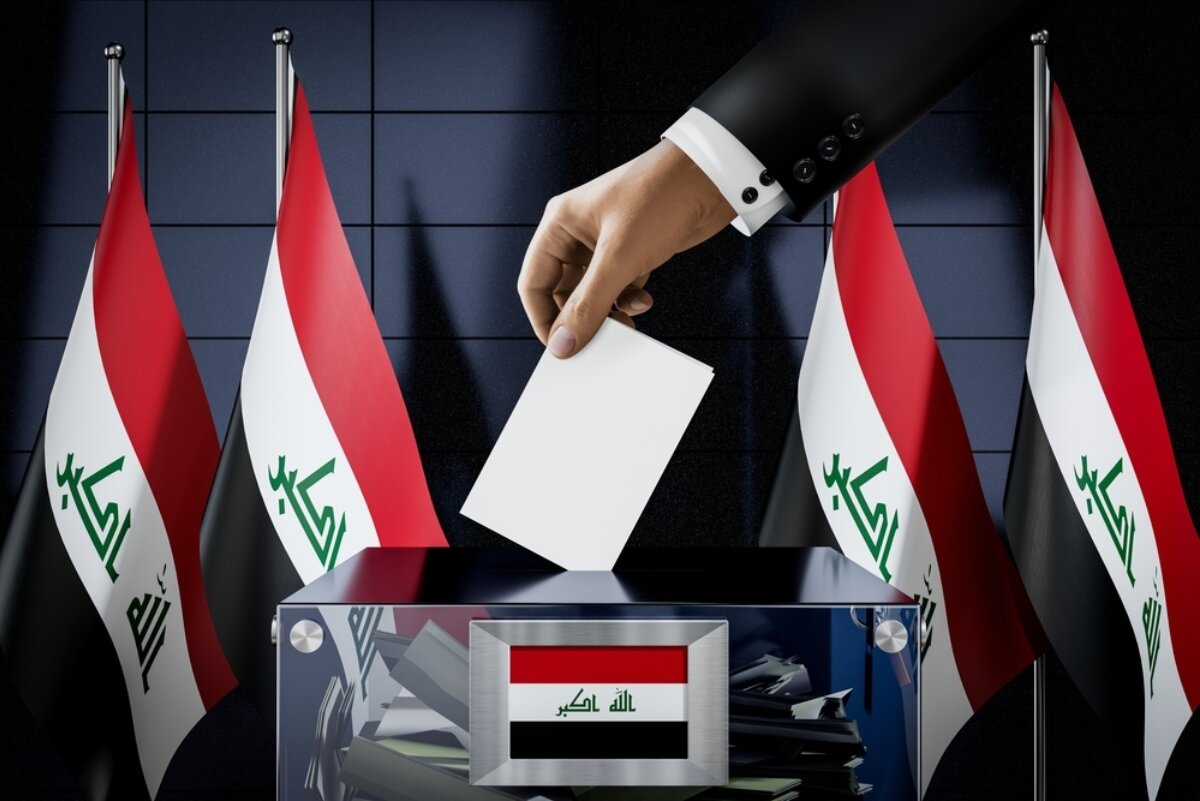
On November 11, 2025, Iraq held general elections to renew the Council of Representatives, whose fifth legislative term – launched in October 2021 – was approaching its natural conclusion. The vote took place twenty years after the first multi-party elections organized following the fall of Saddam Hussein and was conducted within the timeframe set by the Iraqi Independent High Electoral Commission (IHEC), which requires that the electoral process begin at least forty-five days before the expiry of the parliamentary mandate, scheduled for January 2026. This electoral round represented a politically sensitive moment for a country still grappling with significant political, institutional, and social fragilities.
In accordance with the current proportional electoral system (updated through several amendments in 2023) the vote was held using a mechanism designed to reflect Iraq’s ethno-religious diversity, composed mainly of Shia Arabs, Sunni Arabs, and Kurds. Of the 329 seats distributed across eighteen electoral constituencies corresponding to the country’s provinces, nine are reserved for national minorities – Christians (5), Turkmen (1), Shabak (1), Feyli Kurds (1), and Yazidis (1) – while 25% of seats are reserved for women.[1]
Once the vote count is completed, a complex constitutional procedure begins. In principle, it should conclude within approximately four months, although—as demonstrated in 2021—it may extend well beyond a year. According to constitutional provisions and established parliamentary practice, once the results are ratified by the Federal Supreme Court, the Council of Representatives is expected to elect its speaker and two deputy speakers at its first sitting. Subsequently, within thirty days, the Parliament must elect the President of the Republic, who will then task the nominee of the largest parliamentary coalition with forming a government. It is worth noting that such a coalition does not necessarily coincide with the electoral winners, but rather emerges from negotiations conducted within Parliament. The designated Prime Minister must then submit the proposed cabinet to the Parliament for individual votes of confidence, after which the new government can formally assume office.
The 2005 Constitution, along with long-standing political customs, also provides for several balancing mechanisms, including the informal ethno-sectarian distribution of the top state positions – known as muhasasa ta’ifiyya – which assigns the presidency to the Kurds, the speakership to the Sunnis, and the premiership to the Shia. These arrangements were conceived to foster inclusiveness and prevent institutional deadlock; however, they often collide with persistently low electoral participation, frequent divisions among major political forces, and dynamics dominated by elite bargaining. The result is a lengthy and intricate negotiation process that tends to produce heterogeneous and fragile coalitions, with negative implications for governmental stability and effectiveness.
The 2025 electoral round recorded an average turnout of 56%, representing an increase compared to the historically low 41% registered in 2021, despite renewed calls for boycott from some political factions, most notably that of Shia leader Moqtada al-Sadr.
As for the final results, published in the days following the vote by IHEC in Baghdad, the coalition of outgoing Prime Minister Mohammed Shia al-Sudani “Reconstruction and Development” emerged as the leading bloc with 46 seats, followed by the Shia “State of Law” party (29 seats), the Sunni “Taqaddum” party (27 seats), and the two main Kurdish parties, the “Kurdistan Democratic Party” (26 seats) and the “Patriotic Union of Kurdistan” (15 seats).[2] Overall, the broader pro-Iranian Shia bloc known as the Coordination Framework (CF), which includes several parties such as the aforementioned “State of Law”, would collectively control a (non-absolute) majority of 116 seats.
In 2021, Prime Minister al-Sudani secured his position, after months of negotiations, largely due to the support of the Coordination Framework. In the current context, given that no list has obtained an absolute majority, similar alliance-building efforts will again be necessary to form a government. The decisive factor will be the ability of political actors to form broad coalitions capable of securing a governing majority.
Therefore, particular attention will be focused on the Coordination Framework, which, while remaining the largest parliamentary coalition, will nonetheless need additional partners – as in 2021 – and on the possibility of alternative coalition formulas emerging. Such a scenario, though less likely, would not only require reducing the near-hegemonic influence of the CF over national politics but also establishing new and intricate internal balances. These dynamics will likewise affect the position of the incumbent prime minister, whose prospects appear to fluctuate between potential reappointment and exclusion from the future government.
To conclude, the November 2025 elections represent an important step in Iraq’s broader stabilization process. Nonetheless, as outlined above, the vote constitutes only the first stage of a far more complex negotiation phase, heavily shaped by internal dynamics and external pressures. In this regard, Iran’s role – having been a particularly influential actor in Iraqi politics since 2003 – will also be critical, especially at a moment when maintaining a strong foothold in Iraq remains a strategic objective given Tehran’s regional challenges.
Ultimately, it will be the outcome of government formation negotiations that will provide clearer indications of the direction Iraq is likely to take in the coming years.