 Back to Events
Med-Or unveils the research project “Geopolitics, Technologies, and Security in the Mediterranean” at Luiss
The initiative was developed by the Med-Or Italian Foundation in collaboration with the Luiss School of Government as part of the “Geopolitics and Technology” grant program, promoted by the Compagnia di San Paolo Foundation and the CSF Foundation.
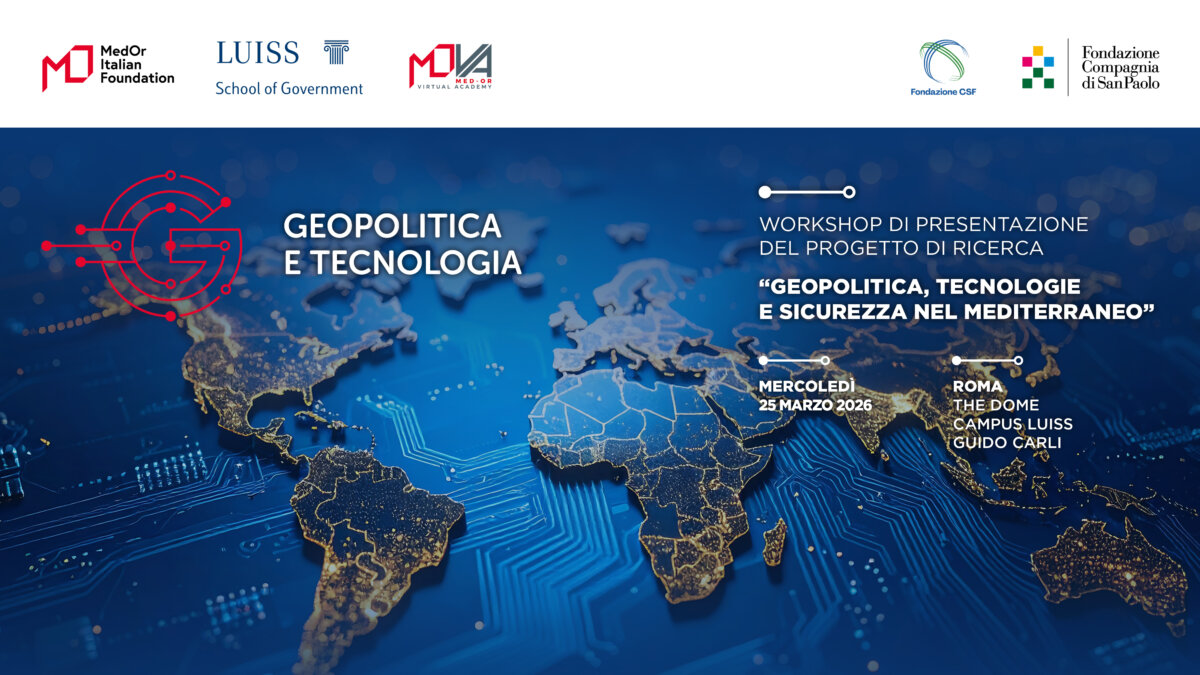
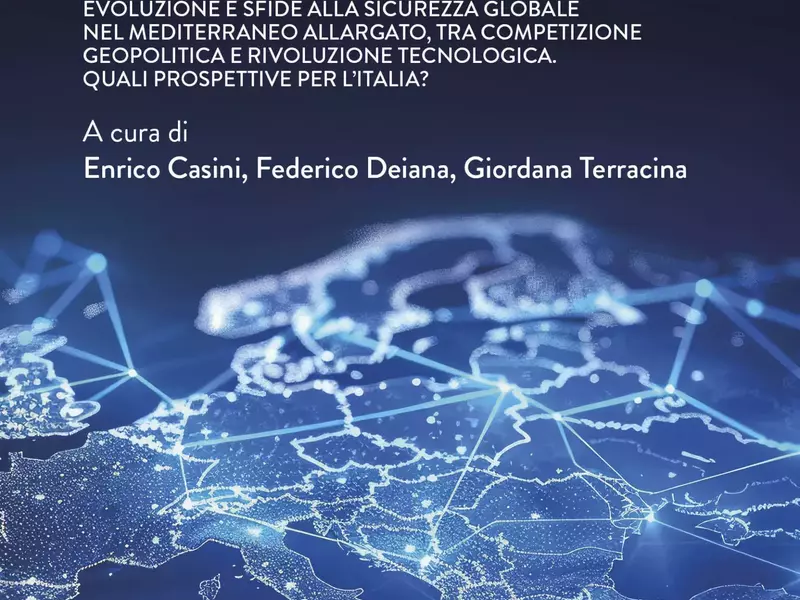
The presentation workshop of the research project developed by the Med-Or Italian Foundation, in collaboration with the Luiss School of Government, entitled “Geopolitics, Technologies, and Security in the Mediterranean: Evolution and Global Security Challenges in the Enlarged Mediterranean amid Geopolitical Competition and Technological Revolution. What Prospects for Italy?”, was held on 25 March 2026 at The Dome of the Luiss Guido Carli campus in Rome.
The project is part of the “Geopolitics and Technology” grant program promoted by the Compagnia di San Paolo Foundation and the CSF Foundation and brings together academic, institutional, and industry expertise to examine the main geopolitical and technological challenges affecting the Enlarged Mediterranean.
The workshop opened with introductory remarks by Marco Minniti, Chairman of Med-Or Italian Foundation, Gaetano Quagliariello, Dean of the Luiss School of Government, and Nicolò Russo Perez, Director of the CSF Foundation, who outlined the project’s objectives, structure, and expected developments. The event also featured the presentation of the first research papers produced within the framework of the project.
The first session, “Trans-Mediterranean Connectivity: Strategic Infrastructure and Geopolitics, between Digital Networks, Logistics and Security,” focused on the role of physical and digital infrastructures in reshaping regional geopolitical balances. Contributions were delivered by Raffaele Marchetti, Full Professor of International Relations and Director of the Center for International and Strategic Studies at Luiss Guido Carli, Francesco Talò, Italy’s Special Envoy for the IMEC Corridor, and Fabio Panunzi Capuano, Vice President Business Development & Corporate Diplomacy at Sparkle. The discussion was moderated by Enrico Casini.
The second session, “Non-Conventional Threats: Hybrid Conflicts across Cyberspace, Disinformation and Maritime Security,” explored the evolving dimensions of strategic competition, with a particular focus on hybrid threats and their implications for regional security. Speakers included Giuseppe Italiano, Deputy Rector for AI and Digital Skills at Luiss Guido Carli, Alessandra Ruggeri, Head of the Geopolitical Analysis Unit at Leonardo International, and Andrea Savino, Vice President Unconventional Underwater Solutions Development at Fincantieri. The session was moderated by Ginevra Leganza.
The third session, “Security and the Energy Transition: Energy, Technology and Strategic Vulnerabilities—Challenges of the Energy Transition in an Emerging Multipolar Order,” addressed the interconnections between energy, technological innovation, and geopolitical risk. Contributions were delivered by Jean-Pierre Darnis, Professor at Luiss Guido Carli and the University of the Côte d’Azur, Giulia Genuardi, Managing Director of the Enel Foundation, and Alessia Melcangi, Professor at La Sapienza University and member of the Scientific Committee of Med-Or. The discussion was moderated by Matilde Vecchioni.
The workshop provided an opportunity for in-depth exchange among experts and practitioners on the key geopolitical, technological, and energy trends shaping the Enlarged Mediterranean, contributing to ongoing strategic reflection on issues of central importance for international security and for Italy’s role in the evolving global landscape.