 Back to Analysis
Taiwan and the Contest over the South China Sea
A strategic flashpoint amid regional rivalries and global ambitions: Taiwan's central role in the Indo-Pacific geopolitical landscape and mounting tensions in the South China Sea over contested sovereignty, maritime security and power projection. The following analysis by Federico Deiana was published in our 2025 Annual Report.
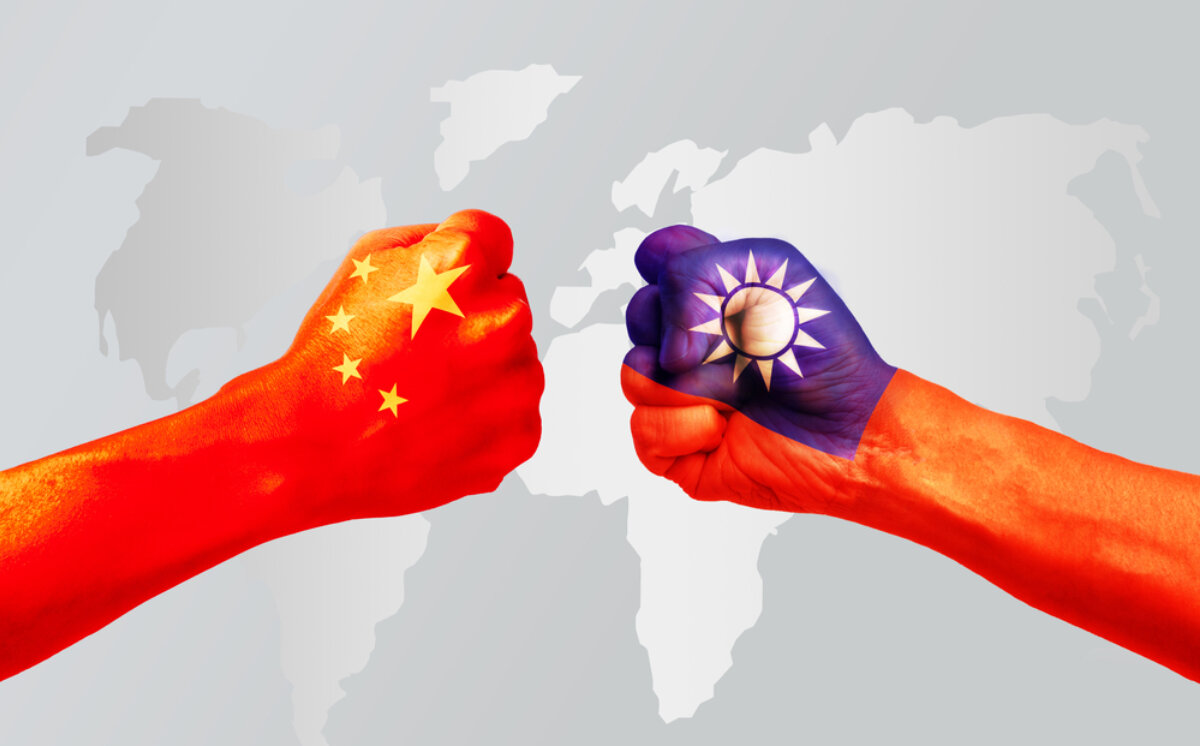
In recent years, the South China Sea has once again emerged as a focal point of contemporary international relations. Despite relative political stability, sustained economic growth and, above all, the absence of major ongoing conflicts, the region remains characterised by persistent security tensions.
As a key arena of global competition between the People's Republic of China and the United States, the region is marked by multiple geopolitical fault lines. These range from control over critical maritime chokepoints, such as the Straits of Malacca, Sunda and Lombok, to territorial and maritime disputes, and ultimately the Taiwan question. These long-standing issues have increasingly been shaped by the growing economic and political influence of countries such as Singapore, Vietnam and Indonesia; the greater interest shown in the region by actors including the Russian Federation and several European countries; and the strengthening of ties with the dynamics and key players of the Indian and Pacific Oceans, particularly New Delhi, Tokyo and Canberra.
The region also represents an enormous and expanding market, vital to global trade. At the same time, however, it appears to be moving towards a renewed manifestation of the well-known "Thucydides' Trap". This is a classic example of the security dilemma, whereby the various actors involved, despite maintaining prosperous economic relations, perceive an increasing risk of war and respond by strengthening their military capabilities [1]. The result is a complex network of alliances and partnerships designed to balance the influence of the two major powers, Washington and Beijing. Rather than reproducing a rigid division into opposing blocs, however, regional actors have sought to pursue policies of multi-alignment, allowing individual countries to preserve their own strategic positions, albeit with significant differences depending on their respective national contexts [2].
Taiwan: Mounting Tensions around the Island
Among the fault lines shaping the international landscape, Taiwan undoubtedly occupies a position of paramount importance. Following the end of the Second World War, the Chinese Civil War continued until 1949, when Communist forces led by Mao Zedong succeeded in gaining control over almost the entire mainland, establishing the People's Republic of China (PRC), with Beijing as its capital. The Nationalist forces of the Kuomintang, led by Chiang Kai-shek, instead retreated to the island of Formosa, where the Republic of China (ROC), founded in 1912, continued to exist, with Taipei serving as its de facto capital [3].
In the years immediately following, the overwhelming majority of countries recognised the ROC as the legitimate sovereign authority over China as a whole, including its membership of the United Nations and permanent seat on the Security Council. From the 1970s onwards, however, a gradual diplomatic shift towards the PRC took place. Italy recognised Beijing as the legitimate representative of China in 1970. In 1971, Taipei lost its seat at the United Nations, and following the historic diplomatic opening initiated by Henry Kissinger and Richard Nixon, the United States under President Jimmy Carter also ceased to recognise the ROC in 1979.
Since then, a degree of ambiguity surrounding the Taiwan question has characterised the international community. While remaining committed to the "One China" principle, which favours Beijing, several countries, including Italy and the United States, continue to maintain bilateral relations with Taiwan despite the absence of formal diplomatic recognition [4].
In 1979, Washington enacted the Taiwan Relations Act (TRA), a federal law governing bilateral relations with Taipei. In particular, the TRA commits the United States to maintaining stable economic and cultural ties with the island and to ensuring that Taiwan possesses "sufficient self-defence capabilities" [5]. Beijing, by contrast, continues to assert its sovereignty over Taiwan. As in the cases of Macao and Hong Kong, the PRC, according to its official declarations, intends to extend its control over the island by 2049.
Since the 1970s, relations between Beijing and Washington have evolved considerably [6]. The People's Republic has witnessed a substantial increase in its economic and commercial influence. China's accession to the World Trade Organization (WTO) in 2001 and the global financial crisis of 2008, in particular, accelerated Beijing's rise as a global power, raising concerns in Washington that its economic strength, combined with its vast population of approximately 1.4 billion people, could eventually translate into political and military hard power.
In this context, the US strategic doctrine known as the Pivot to Asia, launched in 2011, represented a clear indication of the priority increasingly assigned to containing the PRC, compared with other issues that had traditionally occupied a central position in Washington's foreign policy agenda, such as stability in Africa and the Middle East or counterterrorism [7].
Since then, US efforts to contain the PRC have evolved along five main lines of action: enhancing military capabilities, with particular emphasis on multi-domain warfare; employing instruments of economic warfare, including tariffs, to constrain Chinese growth; establishing a complex network of bilateral and minilateral alliances and partnerships across the region; countering Beijing's influence in other parts of the world by strengthening cooperation among like-minded countries; and, finally, reinforcing Taiwan.
Although Washington has never taken the step of formally recognising Taipei and remains committed to its diplomatic One China Policy, it has substantially increased its engagement with Taiwan in recent years. Beijing, meanwhile, has intensified its pressure on the island, adopting an increasingly assertive approach.
In this respect, 2024 was arguably the most challenging year of the twenty-first century. In the Republic of China, January's presidential election resulted in victory for Lai Ching-te, the candidate of the Democratic Progressive Party (DPP) and former vice-president under outgoing President Tsai Ing-wen, who secured more than 40% of the vote. The other two main candidates were Hou Yu-ih of the Kuomintang (KMT), with 33.5%, and Ko Wen-je of the Taiwan People's Party (TPP), with 26.5%.
In the simultaneous parliamentary elections for the Legislative Yuan, however, no party secured the 57 seats required for a majority in the 113-member legislature. The KMT obtained 52 seats, the DPP 51 and the TPP eight, while the remaining two were won by independent candidates [8].
The election results appear to have ensured a degree of political continuity with the previous DPP administration. The party currently represents the political force most opposed to the prospect of eventual reunification with Beijing, unlike the Kuomintang, which has adopted a more conciliatory position towards the PRC since the early 2000s.
Unsurprisingly, Lai Ching-te's victory was followed by a significant increase in threats and aggressive actions by the People's Republic against the island. These included harsher penalties for supporters of Taiwanese independence, with the death penalty also introduced as a possible punishment from 21 June; more frequent disinformation campaigns; the deployment of surveillance balloons over cities and strategic facilities; more than two million cyberattacks against government networks, twice the figure recorded in 2023; the sabotage of several submarine cables in the Strait; and, above all, numerous incursions into Taiwan's Air Defence Identification Zone (ADIZ) [9] and surrounding waters, including restricted areas near the Kinmen and Matsu archipelagos [10].
The most serious episodes of tension during the year occurred on 23–24 May, coinciding with the newly elected president's assumption of office; on 14 October, following Lai Ching-te's speech marking Taiwan's National Day on 10 October, commonly known as Double Ten Day; and, most notably, between 9 and 11 December.
On the first two occasions, Beijing conducted military exercises designated Joint Sword 2024A and Joint Sword 2024B, respectively, during which the island of Formosa was completely encircled by naval and air forces [11].
In December, meanwhile, coinciding with Lai Ching-te's diplomatic tour involving Guam, Hawaii, Palau, Tuvalu and the Marshall Islands, the PRC launched its largest maritime military exercise since the 1996 Taiwan Strait Crisis. Unlike the Joint Sword exercises, the December operations were conducted without any official announcement. They involved simulated interceptions of hostile ships and aircraft, alongside the establishment of a naval blockade designed to restrict access from the Pacific Ocean to the First Island Chain [12].
Throughout the year, President Lai Ching-te responded to the growing threats by strengthening Taiwan's defensive capabilities. In addition to extending compulsory military service from four months to one year, several exercises were organised involving not only the armed forces but also the civilian population, businesses and critical infrastructure. One of the principal objectives was to improve the island's preparedness and resilience in the event of an emergency, whether man-made or natural [13].
In April, for instance, Formosa was struck by a powerful 7.4-magnitude earthquake, a relatively common phenomenon on the island, which caused more than ten deaths and 900 injuries. The earthquake also threatened to inflict serious damage on the strategically important semiconductor industry, in which Taiwan alone accounts for approximately 60% of global production.
On the political and military fronts, Taiwan further strengthened its ties with its partners, particularly the United States, through joint military exercises, training activities and intelligence sharing, as well as arms sales, whose total value with Washington reached $3.6 billion in 2024 [14].
South China Sea: Territorial Disputes and Strategic Balancing
Tensions throughout 2024 were not confined to Taiwan, but extended to other countries bordering the South China Sea. The region is affected by several overlapping territorial and maritime claims, which have prompted Beijing to adopt an increasingly assertive stance towards neighbouring countries.
Through the doctrine known as the Nine-Dash Line, expanded to ten dashes in 2023 to include Taiwan and the Spratly Islands, the People's Republic of China has asserted sovereignty over approximately 90% of the South China Sea.
Contrary to the provisions of the United Nations Convention on the Law of the Sea (UNCLOS), also known as the Montego Bay Convention and ratified by the PRC in 1996, this doctrine relies on highly expansive interpretations of maritime entitlements. These include, for instance, the use of straight baselines, the inclusion of submerged features and claims based on purported "historic rights".
Under Beijing's interpretation, its sovereignty would extend over maritime areas far beyond the 12 nautical miles of territorial sea, the 24 nautical miles of contiguous zone and the 200 nautical miles of exclusive economic zone established under the law of the sea, encompassing areas claimed by Taiwan, Vietnam, Malaysia, Brunei and the Philippines [15].
Despite the ruling issued in 2016 by an arbitral tribunal constituted under the auspices of the Permanent Court of Arbitration, which rejected the legal basis of these claims, particularly those affecting Manila, Beijing dismissed the ruling in its entirety.
After reformulating its maritime claims without fundamentally altering their legal invalidity [16], the PRC intensified its activities in the area. These included the construction of artificial islands, the establishment of military outposts and the use of intimidation against vessels and aircraft operating in disputed waters and airspace.
Such practices have involved the use of water cannons by the Chinese Coast Guard against merchant vessels and fishing boats, dangerous manoeuvres, large-scale military exercises, aerial incursions, and reconnaissance and intelligence-gathering operations.
Faced with this behaviour and increasingly concerned about the growing military power of the People's Republic, South China Sea countries have progressively strengthened their political and security ties with Washington in recent years, while remaining deeply interconnected with Beijing through extensive economic relations [17]. Nevertheless, significant differences persist among these countries in their respective approaches, as also demonstrated throughout 2024 [18].
The Philippines is undoubtedly the country most exposed to security threats, particularly due to its open territorial dispute with the PRC over the Spratly archipelago and, more specifically, Second Thomas Shoal, Scarborough Shoal, Sabina Shoal and Mischief Reef.
Throughout the year, an increasing number of confrontations and incidents were recorded, often following statements by Manila criticising Beijing or military exercises conducted with the United States.
Notably, in late September, the PRC launched a DF-31AG intercontinental ballistic missile into the Pacific Ocean, the first such launch since 1980. The missile passed through the Philippines' ADIZ before landing in waters near French Polynesia.
Since the election of President Ferdinand Marcos Jr. in 2022, bilateral relations with Washington have strengthened considerably, particularly in the security domain.
In addition to expanding military cooperation under the existing 1951 Mutual Defense Treaty and increasing the number of military facilities accessible to US forces from five to nine, the two countries have conducted numerous joint military exercises.
Particularly noteworthy were Balikatan 24, the largest exercise in terms of participating personnel, and Salaknib 24 in April, during which a Mid-Range Capability (MRC) missile system belonging to the US Army's 1st Multi-Domain Task Force was deployed to Luzon for the first time [19].
The same month also witnessed the first trilateral summit involving Philippine President Ferdinand Marcos Jr., US President Joe Biden and Japanese Prime Minister Fumio Kishida. During the meeting, the three leaders reaffirmed their condemnation of Beijing's aggressive behaviour and their commitment to further strengthening existing economic and security ties [20].
Vietnam, by contrast, has pursued a more cautious approach.
In recent years, Hanoi has progressively moved closer to Washington, despite remaining committed to its strategic doctrine of the "Four No's": no military alliances, no foreign military bases on Vietnamese territory, no alignment with one country against another, and no use or threat of force. In 2023, bilateral relations with the United States were elevated to the level of a Comprehensive Strategic Partnership.
The death of Communist Party General Secretary Nguyễn Phú Trọng on 19 July 2024 and the subsequent appointment of President Tô Lâm to the position, the most influential in the country, do not appear to have altered this trajectory.
For example, during a meeting held at the Pentagon in September 2024 with US Secretary of Defense Lloyd Austin, Vietnamese Defence Minister Phan Văn Giang emphasised Hanoi's intention to further enhance defence cooperation with Washington. Key areas included maritime security, disaster relief and arms trade.
In this regard, Vietnam has long pursued a policy of diversifying its military suppliers in order to reduce its excessive dependence on Russian-origin weapons and ammunition, which account for approximately 80% of its arsenal.
Consistent with its bamboo diplomacy, Hanoi also strengthened its relations with Beijing during 2024. Although disputes over the Spratly and Paracel Islands remain unresolved, with frequent coercive actions by the PRC, the two countries signed an agreement in October aimed at further expanding bilateral economic exchanges, currently amounting to approximately $200 billion annually [21].
Similarly, Indonesia appears more interested in consolidating its position as an emerging actor within the Global South than in aligning itself with either of the two superpowers.
Even following the election of President Prabowo Subianto in March 2024, Jakarta seems determined to maintain its traditional balancing approach, known as the Free and Active Foreign Policy [22].
For instance, after taking office, the newly elected president's first official overseas tour included visits to the People's Republic of China and immediately afterwards the United States, followed by Peru, which hosted the 2024 APEC Forum, Brazil, the United Kingdom and the United Arab Emirates.
Despite occasional incursions by the PRC into waters surrounding the Natuna Islands, military exercises with Beijing resumed during the year after more than a decade of inactivity.
At the same time, the 2024 edition of Garuda Shield, a joint military exercise with the United States first launched in 2007, featured greater operational complexity than previous editions and broader participation from other like-minded countries in the region [23].
The country's most significant diplomatic achievement, however, was its accession to the BRICS grouping, which became official on 1 January 2025 [24].
As for the other countries in the region, 2024 largely confirmed the established political positioning of the various actors.
Thailand and Singapore remain Washington's two principal partners [25]. Like Manila, Bangkok has held Major Non-NATO Ally status since 2003 and has been bound to the United States by an alliance treaty dating back to the 1960s, which was further expanded and renewed in 2022.
Similarly, Singapore has concluded several agreements with Washington providing for the use of certain facilities in the city-state by US armed forces, regular joint military exercises, technological and industrial cooperation, and substantial arms sales, including the F-35 stealth multirole fighter aircraft.
Nevertheless, these arrangements have not prevented Thailand and Singapore from maintaining stable relations with Beijing, with which both countries regularly conduct military exercises.
This policy of strategic balancing is unlikely to undergo significant changes under the new prime ministers of Thailand and Singapore, Paetongtarn Shinawatra and Lawrence Wong, respectively, both of whom assumed office in mid-2024.
A similar assessment applies to Malaysia and Brunei. Both countries are involved in the territorial dispute over the Spratly Islands and have concluded several cooperation agreements with the United States, with which they regularly conduct military exercises.
Both also maintain strong ties with Beijing, particularly in the economic sphere.
Laos and Cambodia, by contrast, remain considerably closer to the PRC's positions, despite having initiated dialogue with the United States in recent years.
In particular, Phnom Penh is reportedly bound by an agreement allowing the Chinese Navy to use the Ream Naval Base.
The Shadow of War: Implications for International Security
Overall, the region is undergoing a period of considerable turbulence. In Taipei, the risk of conflict with Beijing is increasingly perceived as a realistic prospect, while elsewhere in the South China Sea regional actors are seeking to preserve their economic ties with the PRC while simultaneously strengthening their security through closer relations with Washington.
Against this backdrop, Donald Trump's election as the 47th President of the United States both confirms the region's importance to the international system and introduces an element of uncertainty regarding its future.
Although containing the People's Republic has long been a shared priority among Republicans and Democrats, as repeatedly demonstrated during the presidential campaign [26], the new administration's initial decisions suggest a particularly confrontational approach towards the PRC.
Unlike in the past, greater emphasis appears to be placed on economic and trade instruments as tools of foreign policy, as demonstrated by the tariffs imposed shortly after Trump took office.
Meanwhile, the strengthening of US political and military power projection is likely to continue.
Over the past decade, frameworks such as the QUAD, AUKUS and the Camp David trilateral partnership with Tokyo and Seoul have enabled the United States to expand its network of alliances while fostering greater strategic integration between the two maritime regions bordering the South China Sea to the west and east: the Indian and Pacific Oceans [27].
Countries such as India, Australia, Japan, South Korea and Papua New Guinea, as well as the Pacific island states of Palau, Micronesia and the Marshall Islands, are now part of a broad regional security architecture, characterised by varying degrees of institutionalisation, that identifies the People's Republic as the principal security threat [28][29].
The European Union and G7 countries have also progressively adopted more assertive positions towards Beijing, incorporating the key concept of de-risking into their policy frameworks.
NATO itself has recently begun to regard the PRC as a systemic challenge to the Alliance's security.
With the emergence of increasingly close strategic convergence between Beijing and Moscow, as well as between Moscow and Pyongyang, the interconnected nature of security dynamics in the Indo-Pacific and those affecting regions closer to Europe, particularly the Wider Mediterranean, has become more apparent.
Although there is insufficient evidence to suggest a permanent expansion of NATO's activities and role into the Indo-Pacific, given its fundamentally Atlantic character, or a comparable geographical extension of the European Union's engagement, it is nevertheless plausible that their connections with the region will continue to deepen in the coming years.
The extent of this engagement will largely depend on Taiwan's future and the evolution of the region's multiple geopolitical fault lines.
For further information, see our Annual Report.
References and Notes
[1] Graham Allison, Destinati alla guerra. Possono l'America e la Cina sfuggire alla trappola di Tucidide?, Fazi Editore, 2018.
[2] Sebastian Strangio, In the Dragon's Shadow: Southeast Asia in the Chinese Century, Yale University Press, 2020.
[3] The historical capital of the ROC is Nanjing. The current Constitution does not specify a de jure capital.
[4] William R. Keylor, Un mondo di nazioni, Guerini Scientifica, 2014.
[5] Taiwan Relations Act, US Congress. https://www.congress.gov/96/statute/STATUTE-93/STATUTE-93-Pg14.pdf
[6] Henry Kissinger, Cina, Mondadori, 2018.
[7] Hillary Clinton, America's Pacific Century Speech, 10 November 2011, US Department of State. https://2009-2017.state.gov/secretary/20092013clinton/rm/2011/11/176999.htm
[8] Brian Hart et al., Taiwan's 2024 Elections: Results and Implications, CSIS, 19 January 2024. https://www.csis.org/analysis/taiwans-2024-elections-results-and-implications
[9] In 2024, the highest number of aerial incursions on record was registered (3,073), with a peak in July (439).
[10] US Department of Defense, Military and Security Developments Involving the People's Republic of China, 2024. https://media.defense.gov/2024/Dec/18/2003615520/-1/-1/0/MILITARY-AND-SECURITY-DEVELOPMENTS-INVOLVING-THE-PEOPLES-REPUBLIC-OF-CHINA-2024.PDF
[11] CSIS China Power, Analyzing China's Escalation After Taiwan President William Lai's National Day Speech. https://chinapower.csis.org/china-taiwan-joint-sword-2024b-coast-guard/
[12] Institute for the Study of War, China–Taiwan Weekly Updates. https://www.understandingwar.org/backgrounder/china%E2%80%93taiwan-weekly-updates
[13] Drew Thompson, Whole-of-Society Resilience: A New Deterrence Concept in Taipei, Brookings, 6 December 2024. https://www.brookings.edu/articles/whole-of-society-resilience-a-new-deterrence-concept-in-taipei/
[14] Defense Security Cooperation Agency, Major Arms Sales, January–December 2024. https://www.dsca.mil/press-media/major-arms-sales
[15] Miles Kenny, Territorial Disputes in the South China Sea, Britannica. https://www.britannica.com/topic/territorial-disputes-in-the-South-China-Sea
[16] US Department of State, Limits in the Seas No. 150: People's Republic of China – Maritime Claims in the South China Sea, 2022. https://www.state.gov/wp-content/uploads/2022/01/LIS150-SCS.pdf
[17] IISS, Asia-Pacific Regional Security Assessment 2024. https://www.iiss.org/globalassets/media-library---content--migration/files/publications---free-files/aprsa-2024/asia-pacific-regional-security-assessment-2024_sp.pdf
[18] Andrew Yew, Cultivating America's Alliances and Partners in the Indo-Pacific, Brookings, 16 September 2024. https://www.brookings.edu/articles/cultivating-americas-alliances-and-partners-in-the-indo-pacific/
[19] US Army Pacific, US Army's Mid-Range Capability Makes Its First Deployment in the Philippines for Salaknib 24, 15 April 2024. https://www.usarpac.army.mil/Our-Story/Our-News/Article-Display/Article/3740807/us-armys-mid-range-capability-makes-its-first-deployment-in-the-philippines-for/
[20] Erin L. Murphy and Gregory B. Poling, A 'New Trilateral Chapter' for the United States, Japan, and the Philippines, CSIS, 15 April 2024. https://www.csis.org/analysis/new-trilateral-chapter-united-states-japan-and-philippines
[21] Lauren Mai et al., An Indispensable Upgrade: The U.S.-Vietnam Comprehensive Strategic Partnership, CSIS, 19 August 2024. https://www.csis.org/analysis/indispensable-upgrade-us-vietnam-and-the-united-states
[22] Ben Bland, The President Who Never Picked a Side, Foreign Affairs, 17 October 2024. https://www.foreignaffairs.com/indonesia/president-who-never-picked-side
[23] Isaac Copeland, Super Garuda Shield 2024: Highlighting Multinational Partnerships, Joint Interoperability, US Army, 6 September 2024. https://www.army.mil/article/279453/super_garuda_shield_2024_highlighting_multinational_partnerships_joint_interoperability
[24] Lauren Mai, The Latest on Southeast Asia: Indonesia Joins BRICS, CSIS, 16 January 2025. https://www.csis.org/blogs/latest-southeast-asia/latest-southeast-asia-indonesia-joins-brics
[25] Congressional Research Service, Thailand: Background and U.S. Relations, 26 August 2024. https://crsreports.congress.gov/product/pdf/IF/IF10253; Congressional Research Service, U.S.-Singapore Relations, 20 May 2024. https://sgp.fas.org/crs/row/IF10228.pdf
[26] Derek Grossman, The State—and Fate—of America's Indo-Pacific Alliances, RAND, 1 November 2024. https://www.rand.org/pubs/commentary/2024/11/the-state-and-fate-of-americas-indo-pacific-alliances.html
[27] Shihoko Goto et al., Hitting the Reset Button in the Indo-Pacific, Wilson Center, 7 January 2025. https://www.wilsoncenter.org/publication/hitting-reset-button-indo-pacific
[28] Palau, Micronesia and the Marshall Islands are parties to the Compacts of Free Association (COFA), a series of political and military agreements with the United States dating back to the 1980s, recently renewed for another twenty years. See Charles Edel and Kathryn Paik, The Compacts of Free Association, Congress, and Strategic Competition for the Pacific, CSIS, 31 January 2024. https://www.csis.org/analysis/compacts-free-association-congress-and-strategic-competition-pacific
[29] Alongside the strategic concepts of the First and Second Island Chains, extending across the South China Sea and the western Pacific, increasing attention has recently been devoted to the Third Island Chain, stretching from the Aleutian Islands through Hawaii to Oceania, and especially to the Fourth and Fifth Island Chains, located in the Indian Ocean and centred respectively on Diego Garcia and the East African coastline. See Frederick "Andy" Cichon, Learn from the Fall of the Philippines: Prepare the Third Island Chain, US Naval Institute, December 2024. https://www.usni.org/magazines/proceedings/2024/december/learn-fall-philippines-prepare-third-island-chain; Kyrylo Cyril Kutcher, China in the Indo-Pacific: Alfred Mahan and the Island Chains, Australian Institute of International Affairs, 16 August 2024. https://www.internationalaffairs.org.au/australianoutlook/china-in-the-indo-pacific-alfred-mahan-and-the-island-chains/