 Back to Insights
Water as a Strategic Vulnerability in Middle Eastern Conflicts
While oil dominates the attention of global markets, water represents the true existential infrastructure of Gulf societies. The growing dependence on desalination is turning water systems into an increasingly significant strategic vulnerability in the region’s conflicts.
In 1983, a little-known analysis by the Central Intelligence Agency identified a strategic vulnerability in the Persian Gulf that often went largely unnoticed in geopolitical assessments of the time—and in many ways still does today. The vulnerability was not oil, but water. The report, focused on the fragility of the desalination facilities already operating across the region, argued that the loss of a single plant would likely be manageable, but coordinated attacks against several installations could rapidly trigger a national crisis in Gulf states. Modern cities in the region depended on a limited number of large coastal desalination plants, meaning that a prolonged disruption could provoke panic, social unrest, and even the departure of large expatriate communities. At the time, analysts also identified Iran as the regional actor most capable of exploiting this vulnerability in the event of conflict. More than four decades later, those concerns appear strikingly relevant, with the underlying vulnerabilities largely unchanged.
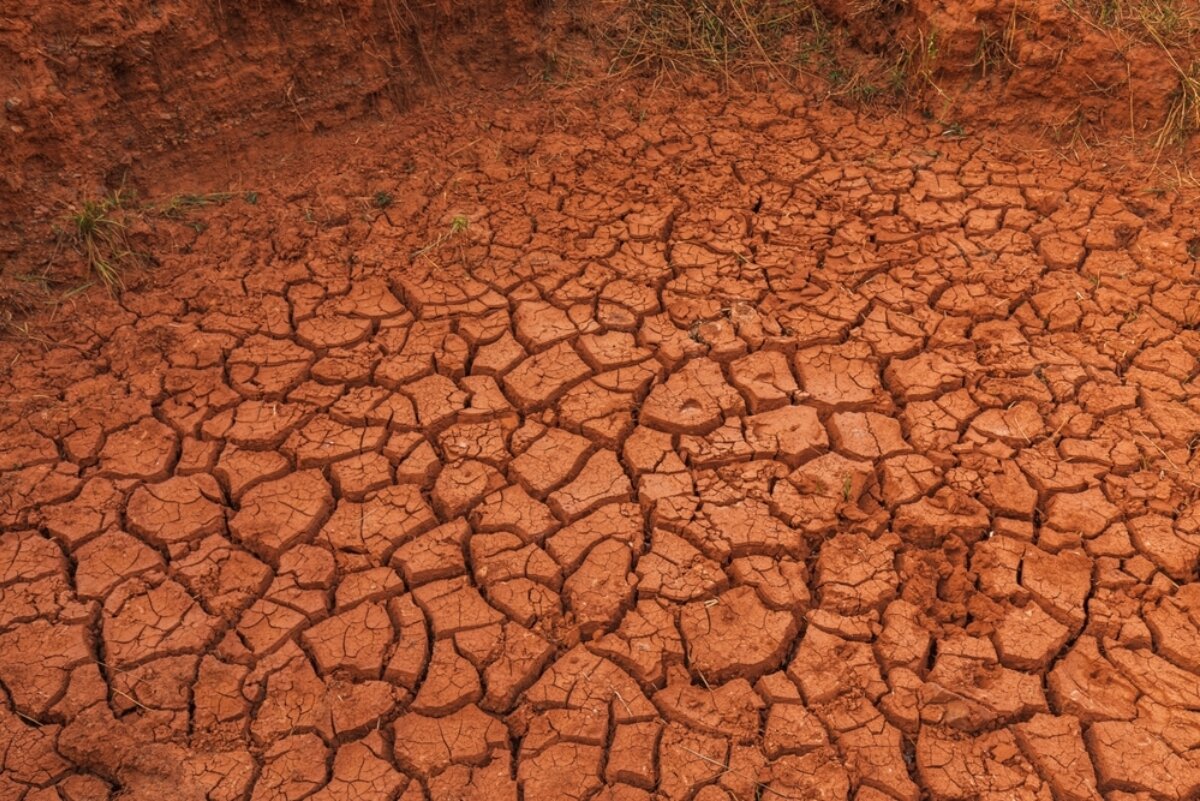
The reason for this centrality is straightforward: in a region marked by chronic water scarcity, desertification, and drought—conditions increasingly exacerbated by climate change—desalination of seawater has become the most immediate solution for guaranteeing water supplies to the Gulf’s major cities.
Developments in recent weeks, amid the military escalation involving Iran, the United States, and Israel, have brought this issue back to the center of the strategic debate. During the course of military operations in West Asia, reports have emerged of tit‑for‑tat attacks involving desalination infrastructure on both sides of the Gulf. Bahrain stated that an Iranian drone had damaged one of its facilities, while Iranian authorities accused the United States of striking an installation on Qeshm Island in the Strait of Hormuz—currently at the center of geopolitical attention given the immense volume of oil that passes daily through this maritime corridor and the tensions affecting traffic there. Although the operational effects appear to have been limited, these episodes once again highlight the structural vulnerability identified by the CIA more than forty years ago: the dependence of Gulf societies on a highly concentrated network of infrastructure for the production of potable water.
This dependence is the result of a combination of geography, climate, and accelerated economic transformation. The Gulf is one of the most arid regions on the planet. Rainfall is scarce and irregular, summer temperatures can exceed 50 degrees Celsius, and the region lacks permanent rivers capable of sustaining large urban populations. For centuries, local communities relied on limited groundwater reserves and oasis systems. However, with the expansion of the oil industry beginning in the 1950s, water demand increased rapidly while many aquifers became progressively overexploited or salinized.
Desalination therefore became the technological solution that enabled the emergence of the modern Gulf economies. By converting seawater into potable water, desalination plants have allowed the growth of major cities, industrial zones, and energy infrastructures in what is otherwise a naturally hostile environment. They have become an existential component of the region’s development. Today, several Gulf countries rely on this technology for the overwhelming majority of their potable water supply. Kuwait obtains roughly 90 percent of its drinking water from desalination, Oman about 86 percent, Bahrain more than 80 percent, and Saudi Arabia approximately 70 percent. Major metropolitan centers such as Abu Dhabi, Dubai, Doha, Kuwait City, and Jeddah are in practice almost entirely dependent on artificially produced water.
Overall, the Middle East accounts for roughly 40 percent of global desalinated water production, with a total capacity approaching 29 million cubic meters per day. Saudi Arabia alone produces more than 7.4 million cubic meters of freshwater daily, making it the world’s largest producer of desalinated water. Without this infrastructure, the extraordinary demographic and economic expansion of the region over recent decades would simply not have been possible.
Yet the very system that enabled this transformation also represents a strategic vulnerability. Unlike oil infrastructure, desalination plants are highly complex facilities that cannot easily be replaced or rapidly repaired. Many cities still depend on only a small number of large coastal plants, meaning that successful attacks against these installations could interrupt drinking water supplies within days. Moreover, desalination facilities are often located alongside other critical infrastructure such as power plants, ports, and industrial complexes. This proximity improves efficiency under normal circumstances but increases vulnerability in times of conflict, as attacks against energy infrastructure could indirectly damage water production capacity.
This factor is particularly significant because water systems guarantee the survival of civilian populations. While disruptions to oil exports primarily affect global markets, attacks on desalination facilities would produce immediate humanitarian consequences for the societies of the region. Millions of people could face water rationing within days, forcing governments to rapidly restrict non‑essential uses such as irrigation, industrial activity, or landscape maintenance. In extreme scenarios, prolonged disruptions could place enormous pressure on cities that are entirely dependent on artificial water systems.
Gulf governments are well aware of these risks and in recent years have invested heavily in mitigation strategies. Strategic storage systems have been developed across the region to ensure emergency reserves. In the United Arab Emirates, for instance, authorities maintain approximately 45 days of strategic water storage. Saudi Arabia has also expanded its desalination capacity while building a network of massive reservoirs designed to stabilize supply in case of disruptions. These measures increase resilience but do not eliminate structural vulnerability, particularly in the event of multiple or sustained attacks.
Another dimension concerns the international legal framework. International humanitarian law prohibits attacks on infrastructure indispensable to the survival of civilian populations. Article 54 of the Geneva Conventions explicitly forbids targeting drinking water installations and supply systems with the aim of depriving civilians of the means necessary for survival. However, conflicts in recent years have demonstrated a gradual erosion of these norms. In several war zones, water and sanitation infrastructure has been struck, raising concerns among analysts that such facilities may increasingly be perceived as legitimate strategic targets.
In this context, a further escalation in the Gulf could generate consequences far beyond the military domain. A systematic attack on desalination infrastructure could produce a regional humanitarian crisis and destabilize highly urbanized economies. Gulf cities host millions of foreign workers whose sudden departure could paralyze key sectors of the economy. At the same time, prolonged water shortages could force reductions in industrial and productive activity, including energy and petrochemical sectors that require significant water consumption.
In this sense, water infrastructure represents one of the most sensitive—and least visible—layers of the Gulf’s strategic architecture. During regional crises, international attention traditionally focuses on the security of energy supplies and on maritime chokepoints such as the Strait of Hormuz. Yet the functioning of desalination plants may be even more fundamental to the internal stability of Gulf societies.
The paradox is clear. Oil remains the commodity that directly influences global markets and international economic stability. Water, by contrast, is the resource that guarantees the daily survival of the region’s populations. A prolonged disruption of desalination systems would therefore produce immediate human consequences locally, while also generating indirect effects across the regional economy and even the energy sector itself.
As tensions surrounding Iran continue to evolve, the vulnerability identified more than forty years ago remains fully relevant. The modern cities of the Gulf are effectively built upon an artificial hydrological system powered by energy and sustained by advanced technological infrastructure. This system has enabled extraordinary economic development. Yet in a context of intensifying geopolitical competition, it also represents one of the most delicate strategic pressure points in the entire region.