 Back to Insights
Iran bars the gates of Hormuz
The closure of the Strait of Hormuz blocks gas and oil exports from the Gulf, triggering a potential energy crisis. The consequences for international balances.
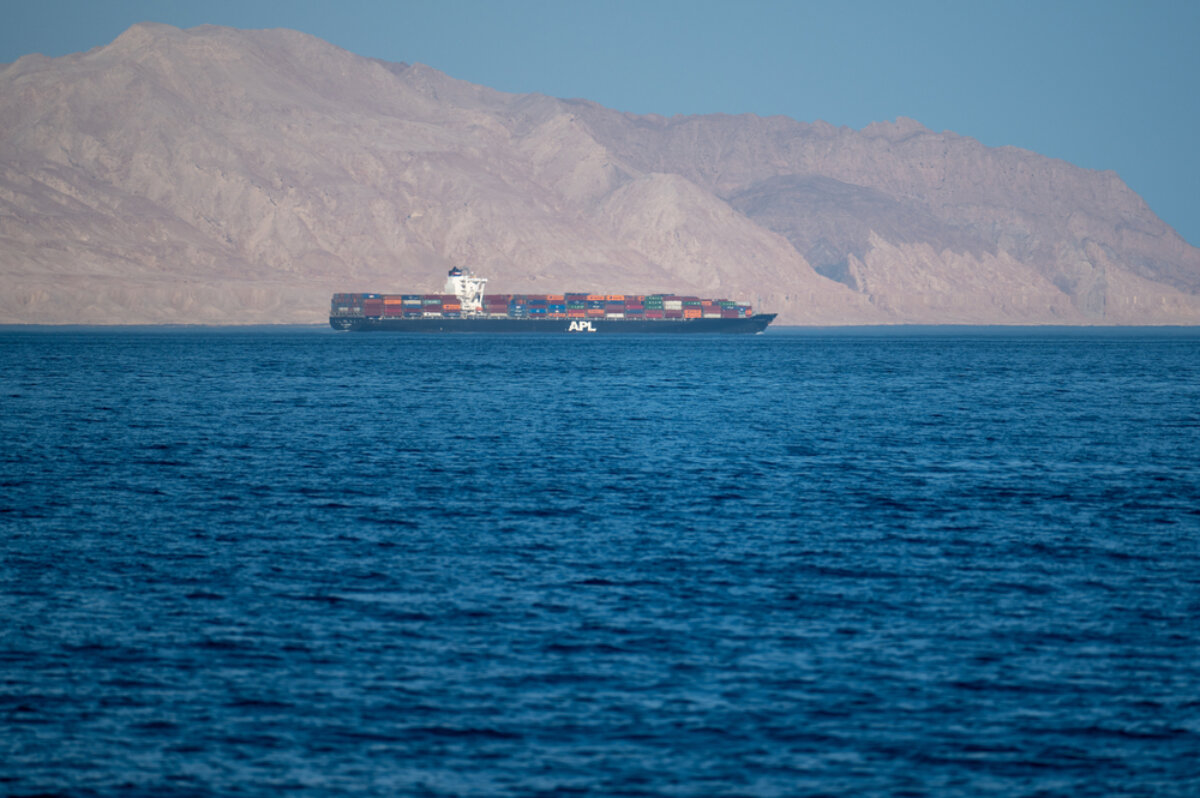
The Strait of Hormuz once again proves to be the lynchpin of the confrontation between the United States and Iran. As the conflict spreads beyond the borders of the Islamic Republic, raising the prospect of a broader regional escalation, the closure of the maritime wedge between Iran and Oman—announced on Tuesday by the Revolutionary Guards—was enough to push oil prices above $80 per barrel.
Container traffic has collapsed by 90 percent, and the surge in Brent crude—up 12 percent in the days following the killing of Ali Khamenei—signals further market shocks on the horizon. According to analysts at Kpler, a full blockade of the strait could propel prices to temporary peaks of $120–130 per barrel, levels reached only briefly in the months following the land invasion of Ukraine.
To understand the magnitude of the disruption, it is enough to note that approximately 20 million barrels per day transit through the strait—the only maritime outlet between the Persian Gulf and the Indian Ocean—representing around 20 percent of global annual oil consumption. These flows are driven largely by the Gulf producers Iraq, Kuwait, Saudi Arabia and the United Arab Emirates. Qatar, meanwhile, supplies roughly 20 percent of global liquefied natural gas exports.
Following Iranian drone strikes over the weekend against the Qatari energy hub of Ras Laffan, Doha announced the suspension of its exports under force majeure. Additional attacks against U.S. bases in the Gulf have pushed Saudi Arabia to precautionarily suspend operations at the giant Aramco refinery in Ras Tanura.
The most immediate repercussions are being felt in Asia, which receives more than 80 percent of the gas and crude passing through Hormuz. India— which accounts, together with China, for nearly half of Asian imports via the strait—has reportedly already implemented rationing of its gas reserves. In Europe, disruptions will affect the gas sector in particular, further increasing the European Union’s dependence on North African suppliers—above all Algeria—while Egypt, despite its vast reserves, remains a net importer and is suffering from the interruption of supplies from Israel, another target of Iranian retaliation.
Paradoxically, the United States is among the least affected actors. Only around 8 percent of its hydrocarbon imports transit through Hormuz, and Washington could use the crisis to redirect domestic production toward the inevitably receptive markets of the Old Continent.
Iran’s strategy appears primarily aimed at shaking the Gulf monarchies. Already uneasy about finding themselves between the anvil of their American ally and the hammer of Iran—which over the weekend struck Saudi Arabia, the United Arab Emirates, Bahrain and Qatar— The Gulf kingdoms fear their oil and gas may remain trapped in their own backyard, with few alternative routes to global markets.
Only two overland pipelines partially mitigate the impact: the East-West pipeline connecting the Gulf to the northern Red Sea through Saudi Arabia, and the Habshan-Fujairah pipeline linking Abu Dhabi to the Gulf of Oman just beyond the Hormuz bottleneck. Together, however, these infrastructures can carry no more than seven million barrels per day.
Weakened by setbacks over the past two years and overshadowed by the United States’ military apparatus, Tehran appears determined to hold out until the countries of the Gulf Cooperation Council—key U.S. allies in the Middle East—press Washington to return to the negotiating table in order to secure the reopening of the strait.
The United States, for its part, could attempt to reopen the passage by force, a move that would involve escort operations reminiscent of the 1987 “tanker war” and would further raise the level of confrontation.
For both sides, the gamble is risky. Tehran is using its vast missile stockpiles to wear down Gulf air defenses through sheer quantity, playing the Hormuz card as leverage to revive negotiations. It is an extreme measure, especially considering that Iran itself accounts for nearly 11 percent of hydrocarbon traffic through the strait and its economy is already under strain from U.S. and European sanctions.
Washington, meanwhile, appears determined to break Iranian resistance before the conflict—already spreading into Syria and Lebanon—engulfs the entire Middle East and before relations between the United States and the Gulf monarchies begin to fray. In the meantime, the costs of war keep rising.