 Back to Insights
Strategic Stability Without Trust: What the Trump-Xi Summit Reveals About U.S.-China Rivalry
The outcomes of the summit between Donald Trump and Xi Jinping in Beijing, in the analysis by Emanuele Rossi
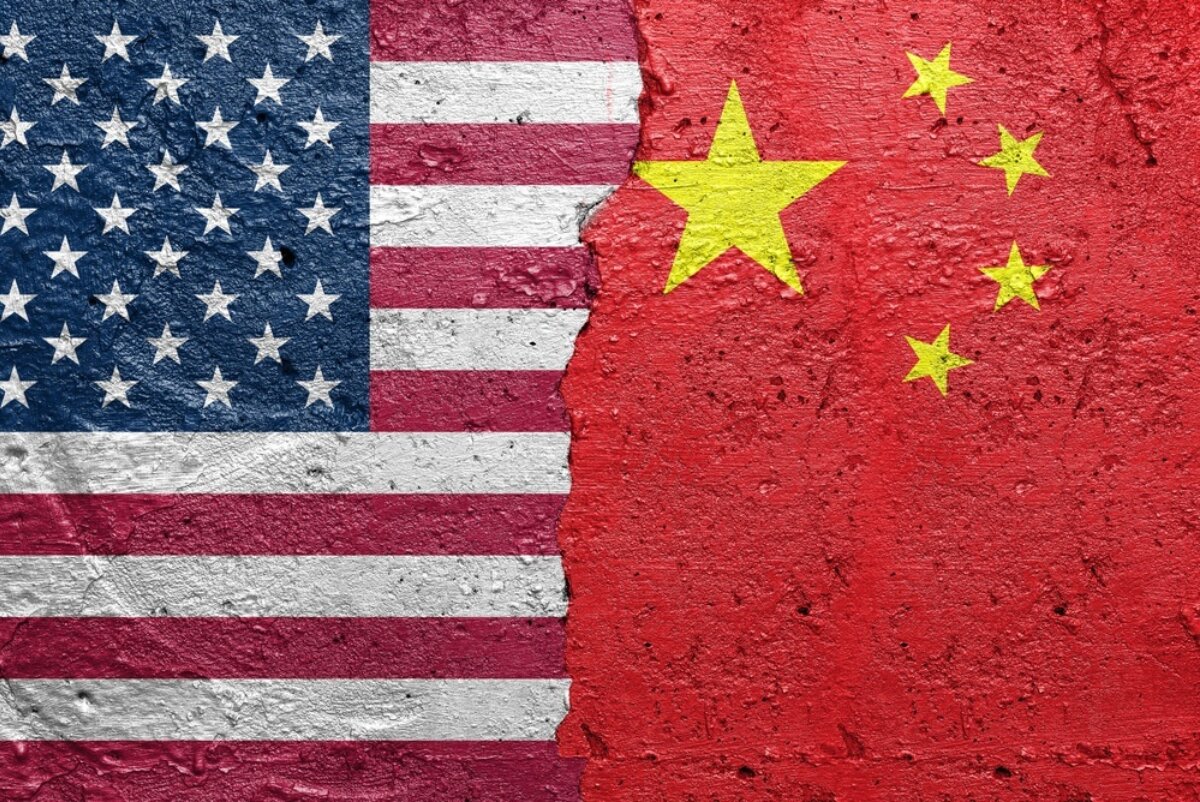
The Trump-Xi summit in Beijing was significant less for what it produced than for what it revealed. The two days of meetings between the Chinese leader and the U.S. president — who arrived in Beijing accompanied by a large delegation including senior administration officials and leading figures from the American and global business community — produced no major agreements.
Trade disputes remain unresolved, export controls were not meaningfully altered, no substantial breakthrough emerged on technological competition or collective security, and Taiwan continues to represent the central red line in the relationship.
And yet, the summit offered an unusually clear window into how Washington and Beijing are beginning to conceive the next phase of their strategic rivalry.
The most important development was political rather than operational. Chinese officials repeatedly described the summit as the beginning of a “constructive China-U.S. relationship of strategic stability,” presenting the concept as a framework intended to guide bilateral relations — with broader global implications — “over the next three years and beyond.” Wang Yi, China’s top diplomat, reinforced the message by defining the formula as a “political consensus” rather than “merely a slogan.”
This matters because the summit may mark the beginning of a gradual shift in the logic of U.S.-China relations. Rather than reducing competition, Washington and Beijing increasingly appear focused on defining its limits, its implicit rules, and above all who has the authority to determine what constitutes acceptable strategic behavior.
The Beijing summit ultimately revealed the progressive institutionalization of a managed rivalry between two systemic competitors that continue to fundamentally distrust one another.
China’s New Grammar of Competition
Through the concept of a “constructive relationship of strategic stability,” Beijing appears increasingly interested in replacing the volatility of recent years with a more structured and predictable form of competitive coexistence with Washington.
One particularly significant aspect is that Chinese officials no longer avoid the language of competition itself. Wang Yi — typically measured in tone — openly acknowledged that “competition exists between major powers,” a formulation that only a few years ago would have been politically less acceptable for Beijing. This reflects a growing Chinese recognition that strategic rivalry with the United States is not temporary but structural and likely to endure for decades.
At the same time, the framework proposed by China is not neutral. Beijing’s definition of “strategic stability” appears closely tied to respect for what it considers its “core interests,” particularly Taiwan, technological development, and political sovereignty. In official briefings and readouts, Chinese officials repeatedly stressed the need for both sides to “honor the commitments they have made.” The language — also echoed by the Chinese embassy in Washington on X shortly before the summit began — suggests an effort to constrain future American coercive measures within a newly established political baseline.
The objective appears to be stabilization without necessarily implying reconciliation, under conditions favorable to China’s long-term strategic trajectory.
A managed relationship reduces the risk of uncontrolled escalation, preserves access to global markets and technological flows, and could limit the use of economic or military pressure by the United States. This is particularly important at a moment when China faces slowing growth, technological restrictions, and an increasingly coordinated Western approach to economic security. In this context, predictability itself becomes a strategic asset. And for the Chinese leadership, one of the most destabilizing variables in the relationship remains Trump’s political unpredictability.
It is precisely the ambiguity of the formula that makes it strategically consequential. China’s version of “managed competition” could ultimately allow Beijing to frame a broad range of American initiatives — from tariffs and export controls to deterrence measures around Taiwan — as incompatible with strategic stability.
America’s Selective Stabilization
The United States entered the summit with different priorities. While Beijing is focused on constructing a long-term political framework, the Trump administration appears more interested in tactical stabilization without relinquishing strategic leverage.
Trump made no major concessions on tariffs, which according to his own statements were not seriously discussed during the summit. The United States also gave no indication of easing export controls or technological restrictions. Taiwan policy likewise remained formally unchanged, despite Trump’s characteristic ambiguity regarding future American commitments.
In an interview with Fox News, Trump emphasized the geographic and strategic asymmetry between the United States and China over Taiwan, describing the island as a “difficult” issue for Washington given that Taiwan lies only a short distance from mainland China while the United States is thousands of miles away. Trump also accused Taipei of having “stolen” the American semiconductor industry, reinforcing an increasingly transactional view of the Taiwan issue even within the broader strategic competition with Beijing.
The summit nevertheless demonstrated Washington’s willingness to compartmentalize competition and cooperation. Discussions touched on investment, fentanyl, AI governance, Iran, energy, and military communication channels.
This approach reflects a logic that could be described as selective stabilization. The objective is not to reduce competition itself, but to prevent competition from becoming strategically unmanageable by crossing certain red lines — foremost among them, for Beijing, Taiwan.
The Chinese leadership increasingly treats reunification with Taiwan as an existential issue closely tied to the broader U.S.-China relationship. Xi himself warned that mishandling the Taiwan issue could produce “clashes and even conflicts,” signaling that Beijing sees the Taiwan dossier not simply as a territorial dispute but as directly connected to the political and strategic legitimacy of the People’s Republic.
In practical terms, this means Beijing may increasingly attempt to portray any future American political or military support for Taiwan as incompatible with the concept of “strategic stability.”
The United States, however, has maintained deliberate ambiguity. Trump avoided directly telling Xi whether Washington would militarily defend Taiwan, remaining broadly aligned with the longstanding logic of “strategic ambiguity,” while at the same time refraining from publicly retreating from existing security commitments or future arms sales to Taipei.
The asymmetry between the two sides nevertheless remains broader and more structural. Beijing appears interested in constructing clearer political guardrails capable of limiting American pressure. Washington, by contrast, seeks to preserve strategic flexibility: maintaining deterrence, technological advantages, and escalation dominance while avoiding direct confrontation.
This divergence in strategic intent could become one of the defining tensions of the relationship.
Technology as Strategic Leverage
One of the most revealing aspects of the summit was the central role played by technology despite its relative absence from official communiqués. Much of the American — and global — technology elite accompanied Trump to Beijing, underscoring the degree to which the issue now sits at the core of strategic priorities.
Artificial intelligence, semiconductors, export controls, and technological leadership emerged repeatedly in post-summit statements. Treasury Secretary Scott Bessent explicitly argued that the United States can engage China on AI governance precisely because Washington still retains a technological lead.
That statement captures an increasingly important feature of the relationship: technology is becoming a central instrument of strategic leverage rather than merely an economic domain.
The summit suggested that both sides increasingly view technological capacity as directly connected to diplomatic influence, deterrence credibility, and geopolitical standing. Leadership in AI, advanced chips, quantum computing, critical mineral supply chains, and export controls are now integral components of great power competition.
This also helps explain the paradoxical nature of the current relationship. Washington and Beijing seek greater stability while simultaneously intensifying competition in the sectors most critical to future power.
The relationship may therefore become more structured diplomatically even as technological decoupling continues to deepen.
The Next Phase of Managed Rivalry
The Beijing summit ultimately revealed a relationship entering a new phase without moving closer to resolving its structural tensions.
The United States and China appear to converge on one limited but important principle: uncontrolled escalation would be damaging for both sides. Beyond that shared interest, however, profound disagreements remain over the meaning of stability itself.
For Beijing, strategic stability appears closely linked to limiting external pressure and protecting core political interests. For Washington, stability remains compatible with technological competition, military deterrence, and economic pressure.
This divergence implies that future tensions will concern not only substantive issues such as Taiwan, chips, or tariffs, but also the very rules that should govern international competition. In this sense, the summit points toward the return of a diplomacy of guardrails in which political stabilization, deterrence, and techno-economic competition coexist without producing genuine strategic convergence.
With competition between the United States and China now openly recognized by both sides as structural, the central challenge increasingly concerns preventing that rivalry from becoming strategically uncontrollable while Washington and Beijing continue to diverge fundamentally over the political and strategic order each seeks to defend.
In the emerging U.S.-China equilibrium, stability no longer represents the alternative to competition. It is becoming one of its principal arenas of contestation.