 Back to Insights
Taiwan and the Long Deterrence: Resilience, Strategic Ambiguity and the Politics of Waiting
The article by Emanuele Rossi
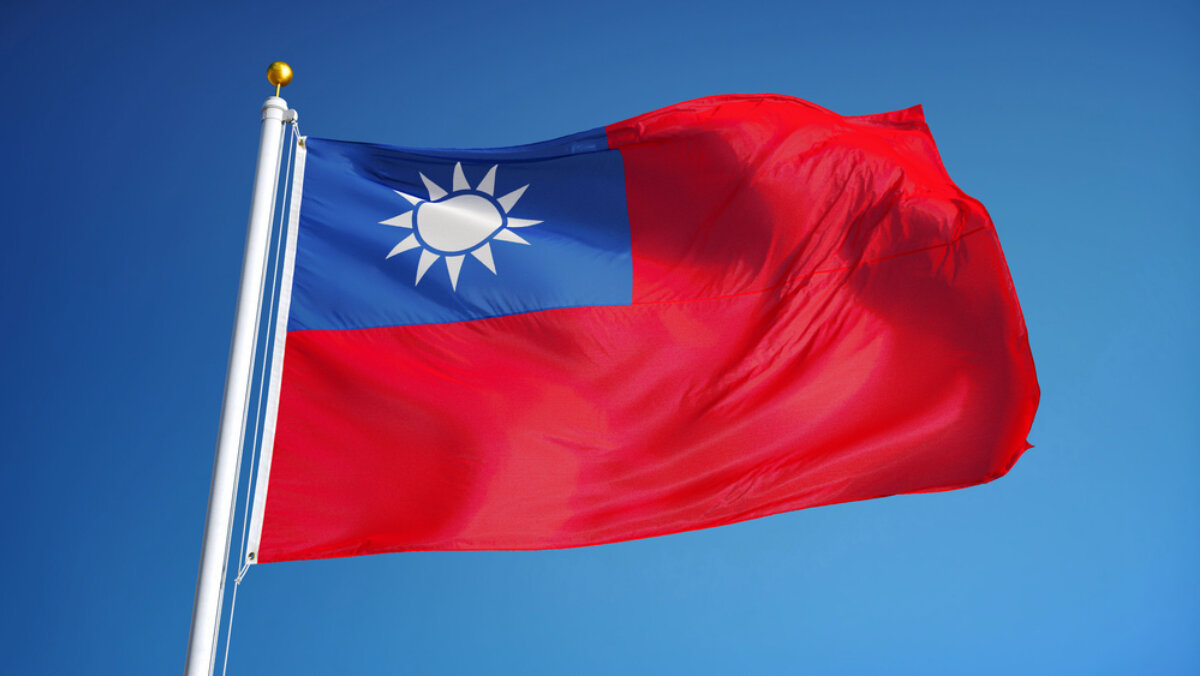
In Taiwan, the prospect of a crisis with China is increasingly understood not as a future contingency, but as a permanent strategic condition. For years, international debate focused almost exclusively on the possibility of an invasion and on the various timelines attached to it, often reduced in media narratives to a simple countdown to war. Inside the island, however, the discussion has gradually shifted onto different terrain: the ability of a society to preserve political, economic and psychological continuity under prolonged pressure that is already unfolding in real time. Looming in the background is 2049, the centenary of the People’s Republic of China and the symbolic horizon within which Beijing continues to frame the question of “reunification”.
This conceptual shift matters because Taiwan increasingly sees the Chinese challenge as structural, permanent and comprehensive. Military pressure, disinformation campaigns, cyber intrusions, diplomatic isolation and economic coercion can no longer be treated as separate episodes, but as components of a grey-zone environment designed to gradually reshape Taiwanese perceptions and strategic psychology.
At the same time, uncertainty surrounding the credibility and predictability of American support is acquiring growing importance in Taipei’s strategic calculations. Formally, the deterrence architecture remains intact: arms sales continue, strategic cooperation deepens and the Taiwan Relations Act still constitutes the backbone of the bilateral relationship. Yet a series of signals from Donald Trump have reinforced the perception that American support may increasingly be treated through a transactional lens, and progressively less as a stable strategic commitment.
Trump’s description of the arms package destined for Taiwan as a “bargaining chip” in relations with Beijing — made while returning from his meeting with Xi Jinping — did not materially alter US doctrine. It did, however, reinforce a perception already spreading inside Taiwan: that the level of American support may increasingly depend on the contingent political calculations of the White House within an emerging “G2” logic.
Taiwan therefore finds itself looking toward a dual horizon of resilience: a long-term one, shaped by the enduring ambitions of the Chinese Party-state; and a shorter-term one linked to the Trumpian approach, together with the uncertainty surrounding the strategic imprint it may leave on future administrations.
This distinction is critical. Taiwan’s problem does not primarily concern the collapse of deterrence architecture, but the gradual erosion of the confidence underpinning it. Polling conducted in recent years shows declining belief that Washington would intervene militarily in the event of a Chinese attack, particularly among younger generations.
The generational dimension is strategically significant. Older generations associate Taiwan’s democratization and de facto autonomy with a condition of existential vulnerability: freedom is understood as something that had to be defended and consolidated. Younger generations, by contrast, inherited Taiwanese democracy as a political baseline. Their perceptions are shaped less by memories of war and more by recent precedents: the American withdrawal from Afghanistan, the war in Ukraine and the West’s inconsistent support for Kyiv, the perception of growing strategic volatility in Washington and a Europe often viewed as distracted and disengaged.
It is precisely on this terrain that Beijing appears intent on operating. China’s objective no longer seems limited to discouraging American military intervention alone. Increasingly visible is the effort to weaken Taiwanese confidence in the likelihood, coherence and sustainability of such intervention. In this context, deterrence acquires a psychological and societal dimension alongside its military one.
Taiwan’s response has therefore progressively expanded beyond conventional defence. In recent years, the island has begun constructing a broader model of “societal resilience”, in which civil preparedness, technological adaptation, supply-chain security and international integration converge within a single strategic logic.
The influence of the war in Ukraine is unmistakable. Across broad segments of Taiwanese society, the defence-tech sector and the strategic community, Russia’s full-scale invasion is studied above all as a demonstration of a society’s capacity to continue functioning under sustained military pressure. Organisations based in Taipei are working in practical terms — through preparedness courses and community-based programmes — precisely on this issue: resilience begins with the ability to preserve institutional and psychological continuity during crisis.
This has produced an important conceptual shift. In Taiwan, there is growing recognition that contemporary conflicts unfold simultaneously across military, informational and cognitive dimensions. The ability of institutions and citizens to preserve operational continuity under pressure may prove as strategically relevant as missile systems or naval platforms.
The same logic is visible in the evolution of Taiwan’s defence industry. The island is rapidly investing in asymmetric capabilities inspired not only by lessons emerging from the Black Sea theatre during the war in Ukraine, but also by Israeli responses after 7 October. Taiwanese companies are now producing autonomous naval drones, loitering munitions and AI-enabled unmanned systems explicitly designed for asymmetric warfare scenarios.
Strategically, what matters is the industrial philosophy accompanying these investments. Taiwanese planners increasingly privilege scalability, redundancy and production resilience over expensive conventional platforms. Drones, autonomous systems and distributed capabilities are viewed as instruments capable of imposing disproportionate costs on a superior military force.
This transformation is closely tied to another critical objective: reducing dependence on Chinese supply chains. Taiwanese firms are developing “non-red” ecosystems free from Chinese-made components, particularly in unmanned and AI-enabled sectors. In this sense, Taiwan’s strategy increasingly converges with broader American efforts to reduce technological dependence on Beijing.
The trajectory of Taiwan’s semiconductor industry — which brought companies from the island into central positions within global value chains — also provides the strategic model Taipei is now seeking to replicate in other sectors, including defence, AI and technological governance: transforming international integration into another, indirect form of deterrence.
One of the most important — and often underestimated — dimensions of Taipei’s strategy lies precisely in this attempt to reinforce Taiwan’s international indispensability by replicating, across other technologies, what already exists in semiconductors, from healthcare governance to artificial intelligence.
Taiwan’s exclusion from the World Health Assembly for the tenth consecutive year is emblematic of this dynamic. Taipei increasingly presents participation in international organisations as a question of global governance as much as diplomatic recognition. Taiwan portrays itself as a technologically advanced democracy possessing strategically relevant expertise in digital healthcare, AI-integrated medical technologies and resilient infrastructures, including cyber resilience.
Behind this strategy lies a precise calculation. Taipei understands that formal diplomatic recognition remains unlikely under current conditions because of the political costs imposed by Beijing’s One China framework. It therefore seeks to raise the geopolitical costs of its own marginalisation by deepening integration into the major global ecosystems of technology, healthcare, supply chains and digital governance.
Semiconductors, AI, cybersecurity and healthcare resilience thus become instruments of strategic relevance as important as economic development itself. Taiwan cannot compete with China in terms of military mass, industrial scale or traditional diplomatic weight. Instead, it seeks to make any attempt at coercion or isolation progressively more costly for the international system as a whole.
Yet an additional risk remains: the gradual normalization of pressure. A society constantly exposed to threat can develop adaptation and resilience, but also habituation and desensitization. At the same time, Taiwan’s strategic trajectory suggests something broader about the nature of contemporary deterrence. The island appears to be preparing itself for a prolonged phase of strategic pressure extending beyond the prospect of conventional conflict alone. Its posture reflects an understanding that twenty-first century geopolitical competition may be determined less by singular military events than by the ability of societies, institutions and alliances to preserve cohesion and continuity over time.
The central question for Taiwan therefore concerns its ability to preserve sufficient internal resilience, international relevance and external confidence to render coercion strategically ineffective over the long term. It is on this terrain that the future of the Taiwan Strait is being shaped today.